Contents
Related Topics
Egg Donation Treatment in Turkey
Starting a family when your own eggs cannot make it happen is a heavy place to be in, and the path forward is rarely simple. Egg Donation Treatment in Turkey is one of the most searched fertility options for international patients, with the full procedure typically costing between €4,500 and €6,500 when delivered through Turkey-based medical tourism companies that coordinate the clinical work in North Cyprus, where the procedure is legal. The same treatment costs £9,000 to £13,000 in the UK and $35,000 to $65,000 in the United States, and waiting lists in those countries can stretch from several months to multiple years because anonymous donors are limited and demand is high. That is the core reason patients across Europe, the Middle East and Central Asia choose Turkey-coordinated egg donation: shorter waits, no donor shortage, transparent all-inclusive pricing, and immediate appointment availability instead of years on a list.
Before going further, one important detail patients deserve to hear honestly: under Turkish reproductive law, egg, sperm and embryo donation are not permitted inside Turkey itself. For this reason, reputable Turkish medical tourism providers coordinate the clinical part of the treatment in North Cyprus (KKTC), which is legally connected to Turkey, requires no visa from Turkish nationals, has liberal fertility regulations, and hosts ESHRE-aligned IVF centers. This guide explains the full procedure, what it costs, who qualifies, the legal framework, the success rates you can realistically expect, and how A-Medical helps you organise everything from clinic matching to interpreter and transfer support.
Cost of Egg Donation in Turkey (2026)
The cost of egg donation treatment in Turkey in 2026 sits in the range of €4,500 to €6,500 per cycle when arranged through Turkish medical tourism providers in partnership with North Cyprus IVF centers. This is an all-inclusive figure that typically covers donor compensation, donor screening, donor stimulation medication, egg retrieval, ICSI fertilisation, embryo culture, and a single embryo transfer. International patients usually pay separately for hotel stay, flights, and any add-on services such as PGT-A (preimplantation genetic testing), embryo freezing for future cycles, or a known/agency donor instead of a clinic donor.
The price gap with Western countries is substantial, and that is the single biggest reason patients travel for donor egg IVF. A side-by-side comparison helps put the savings into context:
- United States: $35,000 to $65,000 for a full fresh donor egg cycle (donor compensation alone often runs $8,000 to $15,000), with anonymous donors hard to find and waitlists at top clinics extending past 12 months.
- United Kingdom: £9,000 to £13,000 per cycle at private clinics, with the NHS not funding donor egg IVF for most patients. UK law requires open identity donation, which keeps the donor pool small and waiting lists at 1 to 3 years in most regions.
- Germany, Italy, France: Egg donation is partially or fully banned, leaving patients no domestic option at any price.
- Spain, Greece, Czech Republic: €5,500 to €9,000 per cycle, with shorter waits than the UK but higher prices than Turkey-coordinated treatment in North Cyprus.
- Turkey-coordinated (delivered in North Cyprus): €4,500 to €6,500, no waitlist, anonymous donor matched typically within 2 to 4 weeks.
Costs vary slightly depending on whether you opt for a fresh or frozen donor cycle, whether you add genetic testing, and how many embryos you plan to transfer or freeze. The currency and labour cost difference between Turkey/North Cyprus and Western Europe explains most of the gap, not a difference in clinical quality. The same embryologists, the same EmbryoScope and IMSI lab equipment, and the same ESHRE-aligned protocols are used.
What Is Egg Donation?
Egg donation, also called oocyte donation or donor egg IVF, is an assisted reproductive technology (ART) in which eggs from a young, screened donor are fertilised with sperm from the recipient's male partner (or a sperm donor) in a laboratory. The resulting embryo is then transferred into the recipient's uterus, where pregnancy can develop just as it would with the woman's own eggs. The recipient carries the pregnancy and gives birth, but the genetic egg material comes from the donor.
Egg donation is the highest-success branch of IVF because the eggs come from women in their early to mid-twenties, when oocyte quality is at its biological peak. Many couples who arrive at this option have already tried multiple cycles of conventional IVF without success, often because of diminished ovarian reserve, premature ovarian insufficiency, or advanced maternal age. For these patients, switching to donor eggs typically lifts the per-transfer success rate dramatically, sometimes from under 10 percent on their own eggs to 65 to 80 percent with donor eggs.
Who Needs Egg Donation Treatment?
Most women never expect to need a donor, and the moment a fertility specialist raises this option is often emotionally heavy. The medical reasons that lead to it, however, are clear and well-documented. The most common indications include:
- Premature ovarian insufficiency (POI), where ovarian function declines before age 40.
- Advanced maternal age, typically 42 and above, where natural egg quality has dropped sharply.
- Diminished ovarian reserve confirmed by low AMH and high FSH levels.
- Repeated IVF failure with own eggs, especially when poor embryo quality is the recurring problem.
- Surgical absence of ovaries due to oophorectomy for ovarian cysts, endometriosis, or cancer.
- Chemotherapy or radiotherapy that has damaged ovarian tissue (often a long-term consequence of treatments such as gynecologic oncology for ovarian or uterine cancer).
- Genetic conditions the woman does not want to pass on, such as fragile X, BRCA mutations, or Turner syndrome.
- Menopause or post-menopause, where pregnancy is still possible with donor eggs and hormone-prepared uterus.
If you fall into one of these groups, egg donation in Turkey (delivered through North Cyprus partner clinics) is often the most affordable and quickest pathway available to you anywhere in Europe or the Middle East.
How Egg Donation Works
The process pairs two women's reproductive cycles: the donor's, who produces the eggs, and the recipient's, whose uterus must be prepared to accept the embryo. The two cycles are synchronised with hormone medication so that the embryo is transferred at the moment the recipient's endometrium is at its most receptive. Most patients only need one short trip abroad for the embryo transfer itself, because the preparatory tests and ultrasound monitoring can usually be done in the patient's home country and shared with the treating clinic. The clinical workflow is essentially an extension of standard IVF, with the same lab equipment and protocols you would see in a high-quality affordable IVF in Turkey program, with the single difference being the source of the eggs.
Egg Donation Process Step by Step
A typical egg donation cycle runs across roughly 4 to 6 weeks from donor matching to embryo transfer. Below is a stage-by-stage breakdown of what happens.
Donor Selection and Screening
Donors are typically aged 19 to 28, non-smokers, with a healthy BMI, regular cycles, and no family history of inherited disorders. They go through the screening required by the WHO and ESHRE: blood tests for HIV, hepatitis B and C, syphilis, CMV, rubella, karyotype analysis, hormonal profile, and a psychological evaluation. The clinic then matches the recipient to a donor on the basis of physical features, blood group, ethnic background, and education level. North Cyprus IVF centers usually offer a profile sheet with the donor's age, height, eye and hair colour, education and a personal note, while keeping the donor's identity anonymous as required by law.
Ovarian Stimulation of the Donor
The donor takes daily injections of FSH-based medication for roughly 10 to 12 days to stimulate her ovaries to produce multiple mature eggs in a single cycle, instead of the single egg of a natural cycle. She is monitored with ultrasounds and blood tests to track follicle growth. When the lead follicles reach optimal size, a trigger injection (hCG or GnRH agonist) is given to mature the eggs for retrieval.
Egg Retrieval
Egg retrieval is a 15 to 20 minute procedure done under light sedation. A thin needle is guided through the vaginal wall using ultrasound and the mature eggs are aspirated from the follicles. The donor recovers in the clinic for a few hours and goes home the same day. Most cycles yield 10 to 18 mature eggs, all of which are allocated to the recipient (good clinics do not split donor batches between multiple recipients).
Fertilization and Embryo Development
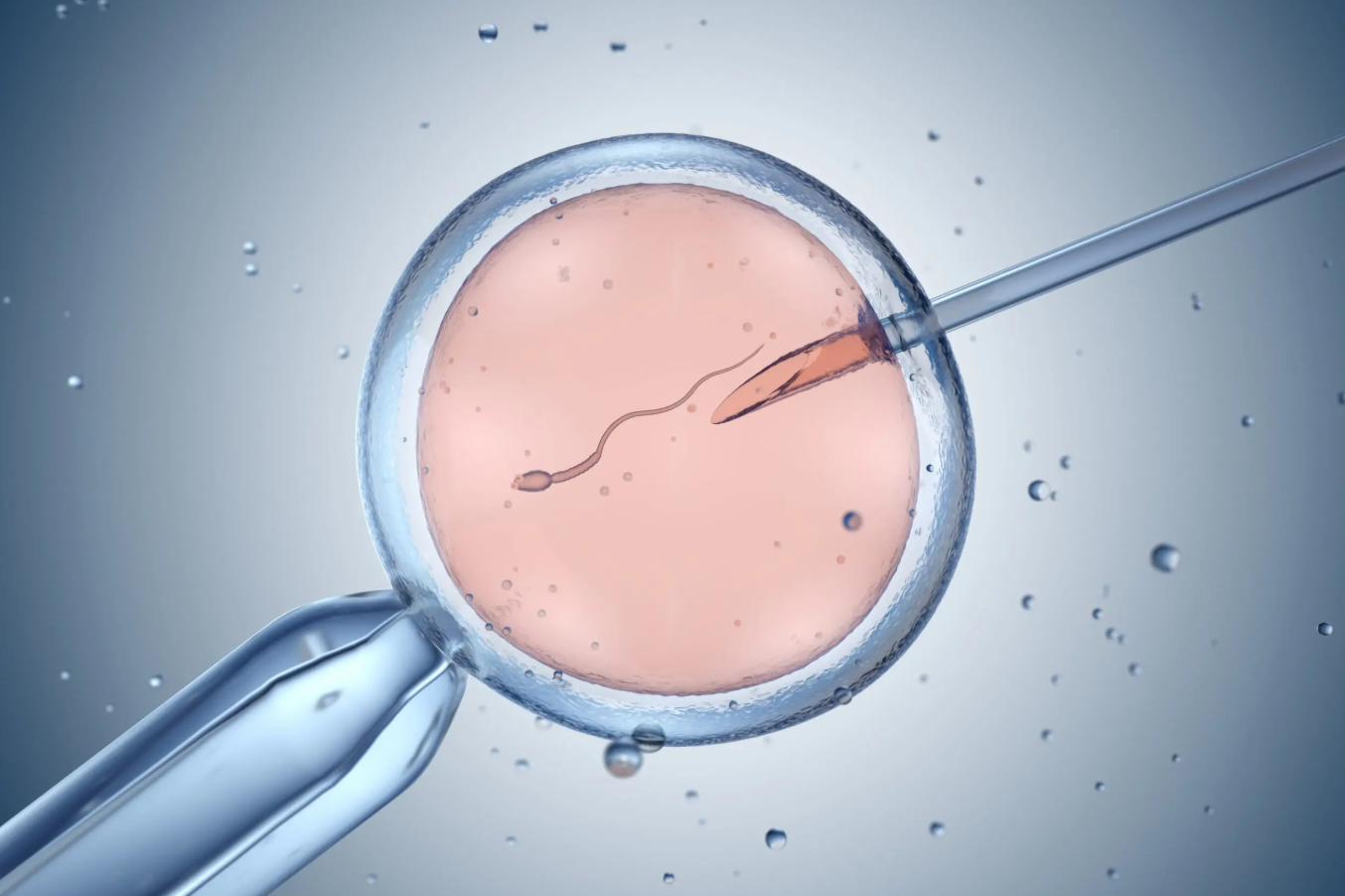
On the same day as retrieval, the eggs are fertilised in the laboratory using ICSI (intracytoplasmic sperm injection), where a single sperm is injected directly into each egg. ICSI is the standard for donor cycles because it gives the highest fertilisation rate. The fertilised eggs are then cultured in an EmbryoScope time-lapse incubator for 5 days, allowing them to grow into blastocysts. The embryologist grades the embryos and selects the one with the highest implantation potential for transfer. Remaining good-quality embryos can be vitrified (frozen) for future cycles.
Embryo Transfer
While the donor is being stimulated, the recipient takes oestrogen and progesterone to thicken her endometrial lining to a target of around 8 mm or above. Once the lining is ready and the embryo has reached blastocyst stage, the transfer is done. It is a quick, painless outpatient procedure, similar to a Pap smear in feel, performed without anaesthesia. A thin catheter is used to place the embryo directly into the uterine cavity. The recipient continues progesterone support for around 12 days, after which a beta-hCG blood test confirms whether pregnancy has begun.
Who Is a Good Candidate for Egg Donation?
Not every patient with fertility difficulties needs to skip straight to donor eggs, and a good clinic will only recommend it after a full assessment. The strongest candidates for egg donation IVF usually share a few characteristics:
- Women over 42 to 43 with low AMH and reduced response to ovarian stimulation.
- Women under 40 with confirmed premature ovarian insufficiency or early menopause.
- Patients who have completed two or more failed IVF cycles using their own eggs with poor embryo grades.
- Survivors of childhood or young-adult cancer treatment that compromised ovarian function.
- Women born without functioning ovaries or with conditions like Turner syndrome.
- Couples where the female partner carries a serious heritable genetic disease.
- Same-sex male couples using a gestational carrier (note: this last group cannot be served via the Turkey/North Cyprus route, as surrogacy is not permitted).
A healthy uterus and the ability to safely carry a pregnancy are the two minimum requirements on the recipient side. Age limits in North Cyprus IVF centers are flexible: most clinics treat patients up to age 50, and selected clinics extend treatment to age 55 with a fitness-for-pregnancy assessment.
Egg Donation vs IVF with Own Eggs
The clinical procedure is similar, but the success curves are very different. Conventional IVF using a woman's own eggs has success rates that fall sharply with maternal age, dropping from around 45 percent per transfer at age 30 to under 5 percent by age 44. Egg donation breaks that curve because the egg quality is fixed by the donor's age, not the recipient's. The differences worth knowing:
- Success per transfer: 65 to 80 percent with donor eggs across all recipient ages, versus 5 to 35 percent with own eggs depending on age.
- Cycles to live birth: most donor egg patients conceive within 1 to 2 transfers; many own-egg patients over 40 need 4 or more cycles.
- Genetic link: own-egg IVF preserves the genetic connection to the mother; donor egg IVF gives the genetic input from the donor while the recipient remains the gestational and legal mother.
- Cost per live birth: although a donor cycle costs more upfront than an own-egg cycle, the cost per successful birth is often lower because fewer attempts are needed.
Success Rates of Egg Donation Treatment

Egg donation has the highest success rate of any IVF procedure. Verified data from established North Cyprus IVF centers reports clinical pregnancy rates of around 74 to 80 percent per embryo transfer for donor egg cycles, with some clinics publishing rates above 75 percent across all age brackets. The reasons for the high numbers are straightforward:
- Donors are between 19 and 28, the age window where egg quality is best.
- Cycles use fresh donor eggs, not frozen, which gives a small but consistent edge in implantation.
- Multiple mature eggs are retrieved per cycle, allowing the embryologist to choose the best blastocyst for transfer.
- North Cyprus law allows transfer of more than one embryo when medically appropriate, which improves cumulative pregnancy rates for patients who accept the chance of twins.
- ICSI fertilisation and EmbryoScope culture are standard, not premium add-ons.
It is worth being clear-eyed about one limitation: North Cyprus clinics are not required to report results to ESHRE or any external registry, so success rates published by individual clinics are self-reported. A reputable provider will be transparent about how their numbers are calculated (per transfer vs per cycle vs per patient) and will share data broken down by recipient age. For patients deciding between own-egg and donor-egg pathways, our breakdown of Turkey IVF success rates by age (under 35, 35 to 40, and over 40) is a useful comparison point before committing to either route.
Legal and Ethical Aspects of Egg Donation in Turkey
This is the most misunderstood part of the topic and worth reading carefully. Egg, sperm and embryo donation are prohibited under Turkish reproductive law, as is gestational surrogacy. Inside Turkey, IVF clinics may legally treat only married heterosexual couples using the couple's own eggs and sperm. PGD/PGT for medical reasons is permitted; gender selection without medical reason is not. This legal framework has been in place for years and applies to every IVF clinic operating in Istanbul, Ankara, Antalya, Izmir, and elsewhere on the Turkish mainland.
Because patients still need access to donor eggs, the Turkish medical tourism industry has developed a clear legal pathway: the clinical part of the egg donation treatment is delivered in North Cyprus (Turkish Republic of Northern Cyprus, KKTC), where it is fully legal and regulated by the local Ministry of Health under Law 57/2014 and Regulation 32/1998. Key features of the North Cyprus legal framework:
- Egg, sperm and embryo donation are all permitted.
- Donors are anonymous by law; identifying information is never shared with recipients.
- Single women and same-sex female couples may receive treatment in addition to married heterosexual couples.
- Recommended age limit is 45, with clinical discretion up to 50 to 55 after a fitness-for-pregnancy assessment.
- Each donor may donate up to 5 times under North Cyprus law.
- The recipient and her partner are the legal parents of any child born; the donor has no legal rights or obligations.
- Travel from Turkey to North Cyprus requires no visa or passport for Turkish citizens, and short-haul flights connect Istanbul to Ercan in around 90 minutes.
From an ethical standpoint, the program follows the same principles applied across Europe: informed consent, donor screening, anonymity protection, and counselling support for the recipient couple before they commit to treatment.
Risks and Considerations of Egg Donation
Donor egg IVF is a well-established procedure with a strong safety record, but no medical treatment is risk-free. The risks divide into three groups: those that affect the donor, those that affect the recipient, and the emotional and ethical considerations the recipient couple needs to weigh.
For the donor:
- Mild to moderate side effects from stimulation medication, including bloating, mood changes, and breast tenderness.
- Ovarian hyperstimulation syndrome (OHSS), now rare with modern antagonist protocols, occurring in under 1 to 3 percent of cycles.
- Small risk of bleeding or infection at the egg retrieval site.
For the recipient:
- Side effects from oestrogen and progesterone medications, such as headache, nausea, or breast tenderness.
- Risk of multiple pregnancy if more than one embryo is transferred, which can increase obstetric complications.
- Pregnancy-related risks elevated in older recipients (over 45), including gestational hypertension, gestational diabetes, and preterm delivery.
- Standard early pregnancy risks: miscarriage, ectopic pregnancy, although rates with donor eggs are similar to or lower than the general IVF population.
Emotional and ethical considerations:
- The decision to use a donor often involves grieving the loss of a genetic connection to one's child.
- Pre-treatment counselling helps couples decide whether and when to disclose the donor origin to the future child.
- Donor anonymity is permanent under North Cyprus law, which differs from open-identity systems in countries like the UK.
What Affects Egg Donation Cost?
Two patients can pay quite different amounts for what looks like the same package, and the variation usually comes from a small set of factors:
- Fresh vs frozen donor eggs: fresh cycles cost more because of the synchronisation work, but offer slightly higher success rates.
- Anonymous clinic donor vs known/agency donor: bringing your own donor or using an international agency adds €5,000 to €10,000.
- Add-on procedures: PGT-A genetic screening, embryo glue, assisted hatching, and EmbryoScope time-lapse may be included or charged extra depending on the clinic.
- Embryo freezing and storage: vitrification of surplus embryos and the first year of storage is sometimes included, sometimes a €400 to €800 add-on.
- Number of embryo transfers covered: some packages include only the first transfer; others include a frozen embryo transfer if the first cycle does not result in pregnancy.
- Medication for the recipient: oestrogen and progesterone are inexpensive but may be included or excluded from the headline price.
- Travel and accommodation: 5 to 8 nights in North Cyprus is the typical stay; A-Medical includes hotel and transfer in package quotes.
Why Choose Turkey for Egg Donation Treatment?
Turkey is the principal medical tourism hub for the wider region, and Turkish providers have built deep partnerships with the IVF centers across the border in North Cyprus. This combination is what makes Egg Donation Treatment in Turkey (in the medical tourism sense of the phrase, with delivery in KKTC) such a strong choice. The advantages cluster around five themes.
Advanced Fertility Clinics
The North Cyprus IVF centers used by Turkish medical tourism providers run laboratories equipped with EmbryoScope time-lapse incubators, IMSI high-magnification sperm selection, RI Witness electronic identification systems, and vitrification facilities. These are the same lab tools used by the top fertility centers in Western Europe. Many clinics hold ISO certification and align their protocols to ESHRE standards.
Experienced Reproductive Specialists
Reproductive endocrinologists and embryologists in this region come from the same academic background as Turkish university hospitals, with many having trained or held positions at institutions in Istanbul and Ankara before moving into full-time IVF practice. Several clinic directors are active members of ESHRE and the American Society for Reproductive Medicine (ASRM), and have published in the field of oocyte donation and assisted reproduction.
High Success Rates
Reported per-transfer pregnancy rates for donor egg cycles sit in the 70 to 80 percent range, which is comparable to or higher than published averages from Spain and the Czech Republic. The main drivers are the young donor age window (19 to 28), fresh egg use, and the legal flexibility to transfer more than one embryo when clinically appropriate.
Affordable Treatment Options
All-in pricing of €4,500 to €6,500 puts the treatment within reach for patients who could not realistically afford the same care in the UK, US or Germany. For couples who have already spent on multiple unsuccessful own-egg cycles, the financial reset of moving to a Turkish/Cypriot package is often the difference between continuing treatment and stopping.
International Patient Services
Turkish medical tourism agencies handle the logistics that would otherwise overwhelm an international patient: visa guidance for Turkey and onward travel to North Cyprus, airport pickup, hotel booking close to the clinic, interpreter support during consultations, prescription support after returning home, and direct communication with the medical team in your language. This is exactly the kind of operational layer that A-Medical provides.
Best Fertility Clinics for Egg Donation (Delivered in North Cyprus)
Because egg donation in Turkey is legally delivered in North Cyprus, the clinic options below are the established IVF centers across the border that Turkish medical tourism providers (including A-Medical) work with. Each has a track record in donor egg IVF, ESHRE-aligned lab standards, and substantial international patient experience. A-Medical matches each patient to the clinic that best fits their age, medical history and preferences.
North Cyprus IVF Centre
Established in 1998 in Nicosia, this was the first IVF clinic in North Cyprus and is led by Assoc. Prof. Dr. Savaş Özyiğit, an active member of ESHRE and ASRM and the author of the egg donation chapter in the first IVF textbook published in Turkey. The clinic operates a strict donor recruitment policy with donors aged up to 29, and reports egg donation success rates of around 80 percent per transfer.
Dunya IVF Clinic
Operating since 2008, Dunya IVF is one of the most internationally recognised fertility clinics in North Cyprus. The clinic treats female patients up to age 55 after a fitness-for-pregnancy assessment, and uses EmbryoScope+ and the RI Witness identification system. Reported clinical pregnancy rates for egg donation reached 74 percent in 2024, with a 77 percent rate for embryo donation.
EuroCARE IVF
EuroCARE follows ESHRE-aligned screening protocols, with all donors aged 20 to 28, anonymous and rigorously tested. The clinic publishes egg donation success rates above 70 percent per embryo transfer cycle, and offers a model where most preparatory work can be done in the patient's home country, reducing the in-Cyprus stay to around 8 days for the embryo transfer.
Miracle IVF Cyprus
Led by Dr. Firdevs Uguz Tip, Miracle IVF is the only IVF laboratory in Cyprus equipped with the IVFID Witness identification system and one of the few centers offering IMSI alongside EmbryoScope. The clinic publishes pregnancy rates up to 85 to 90 percent in selected donor cycles and runs a tandem treatment option (using donor and own eggs in parallel) for patients who want to maximise embryo numbers.
Hope Fertility Cyprus
Located in Nicosia and led by Dr. Zehra Onar, Hope Fertility focuses heavily on international patients and is consistently rated highly for patient communication and coordinator support. The clinic runs both fresh and frozen donor egg programs and provides detailed donor profiles within the limits set by North Cyprus anonymity law.
Elite Research and Surgical Hospital
Affiliated with North Cyprus IVF Centre under Dr. Özyiğit, Elite functions as a multi-disciplinary surgical and research hospital that handles more complex fertility cases, including patients with prior failed cycles, repeated implantation failure, or coexisting conditions like severe endometriosis or uterine factor infertility.
How to Plan Your Trip for Egg Donation Treatment
The treatment is logistically simpler than most patients expect. The work splits into two phases: a preparatory phase you can complete at home, and a short on-site phase in North Cyprus.
Before travel:
- Initial online consultation with the clinical team to review your medical history.
- Local hormone tests (FSH, LH, oestradiol, AMH, TSH, prolactin) and an ultrasound scan.
- Sperm analysis for the male partner if applicable.
- Donor matching based on a profile sheet and physical features.
On-site in North Cyprus:
- Arrival in Istanbul or direct flight to Ercan Airport (no visa required for Turkish nationals).
- First clinic visit: lining check, medication review, sperm sample if fresh.
- Embryo transfer 24 to 48 hours later (the procedure itself takes 10 to 15 minutes).
- 1 to 2 days of rest at the hotel, then return home.
- Pregnancy blood test approximately 12 days later in your home country.
Total time on the ground in North Cyprus is typically 5 to 8 nights. A-Medical handles flights coordination, hotel, transfers, and clinic appointments so the patient can focus on the treatment itself.
Egg Donation in Turkey vs Other Popular Destinations
If you are weighing several countries, a quick comparative view helps. The most common alternatives to Turkey-coordinated donor egg IVF (delivered in North Cyprus) are Spain, Greece and the Czech Republic.
- Spain: large donor pool, high success rates, but typical price €7,000 to €9,000 and waiting times of 2 to 6 months for specific phenotype matches.
- Greece: liberal regulations, accepts older patients, prices around €5,500 to €8,700, and shorter waits than Spain.
- Czech Republic: tightly regulated, transparent pricing of €4,900 to €6,900, but limited Mediterranean phenotype donors.
- Turkey-coordinated (North Cyprus delivery): €4,500 to €6,500, no waitlist, broad phenotype matching including Turkish, Middle Eastern, Caucasian and mixed-European donor pools, and short flight times from Istanbul.
For patients from Azerbaijan, Central Asia, the Gulf states, and Turkey itself, the geographic and linguistic proximity make this option especially convenient. Many patients also combine the treatment with a short stay in Istanbul before or after, which is straightforward when the trip is coordinated through a Turkish provider. If you want a wider view of how Turkey compares against other international fertility destinations on price, success rates and waiting times, our overview of the best and cheapest countries for IVF treatment abroad covers the full landscape.
Pre-Treatment Tests Required Before Starting
A donor cycle relies on accurate baseline data, and the more complete the workup before you arrive, the smoother the in-clinic phase is. Standard pre-treatment investigations include:
- For the recipient: hormone profile (FSH, LH, AMH, oestradiol, prolactin, TSH, free T4), full blood count, blood group and Rh factor, viral screening (HIV, hepatitis B and C, syphilis, CMV, rubella), pelvic ultrasound, and a recent saline infusion sonography or hysteroscopy to confirm a normal uterine cavity.
- For the male partner: semen analysis with morphology, viral screening, and karyotyping if there is a history of recurrent pregnancy loss.
- Optional but useful: thrombophilia panel, immunology screen, and endometrial receptivity analysis (ERA) for patients with prior implantation failure.
Most of these can be done in your home country and uploaded to the clinic's electronic file. A-Medical's coordination team reviews your local results before travel to flag anything that should be repeated or supplemented.
What Happens After Embryo Transfer?
The two weeks between transfer and pregnancy test are emotionally intense, and what you do during that period genuinely matters. Standard medical guidance:
- Continue progesterone support (vaginal pessaries, oral or IM injection) exactly as prescribed until the pregnancy test.
- Resume normal daily activity; bed rest is no longer recommended and can actually increase stress.
- Avoid heavy lifting, intense exercise, very hot baths, saunas and alcohol.
- Eat normally; there is no special fertility diet that has been shown to change implantation outcomes.
- Take folic acid 400 to 800 mcg daily, plus vitamin D if your levels are low.
- Beta-hCG blood test 10 to 14 days after transfer; if positive, repeat after 48 hours to confirm appropriate doubling.
- First viability scan around 6 to 7 weeks of pregnancy.
If pregnancy is confirmed, hormone support is usually continued through the first trimester. Ongoing obstetric care can be transferred to your local provider, although the North Cyprus clinic remains available for remote consultation.
When Egg Donation May Not Be the Right Option
Honesty matters here as much as anywhere else. Egg donation is not the right answer for every fertility situation, and a responsible provider will tell you so. Situations where donor eggs are unlikely to be the right step:
- Severe uterine factor infertility (Asherman's syndrome, congenital uterine absence) where pregnancy cannot be safely carried; gestational surrogacy would be needed instead, which is not legal in Turkey or North Cyprus.
- Untreated medical conditions that make pregnancy dangerous, such as uncontrolled cardiac disease, severe diabetes, or active malignancy.
- Couples who have not yet exhausted reasonable own-egg IVF options and where own-egg success is still realistic.
- Patients seeking gender selection without medical indication, which is not permitted under either Turkish or North Cyprus law.
- Single male patients or male same-sex couples, since surrogacy is not available through this route.
If donor eggs are not the right path for you, A-Medical can also coordinate other fertility treatment in Turkey options including standard IVF and ICSI with own eggs, where Turkey's domestic clinics are excellent and fully legal.
How A-Medical Can Help?
A-Medical is a medical tourism coordinator, not a clinic. That distinction matters: our job is to match you with the right clinic for your specific case, negotiate transparent all-inclusive pricing, and handle every logistical detail so you can focus on the treatment. For egg donation treatment, patients working with A-Medical typically receive:
- No waitlist: donor matching usually completed within 2 to 4 weeks of your initial enquiry.
- Fast appointment scheduling: most patients are flying within 4 to 6 weeks of their first call with us.
- Best-fit clinic matching: we pair you with the North Cyprus IVF center whose protocols, age policy, donor pool and price structure match your case, instead of pushing every patient to the same clinic.
- Honest, all-inclusive quotes: a single price covering the medical procedure, hotel accommodation in North Cyprus, airport transfers, and interpreter support.
- Interpreter and translation support: full English, Russian, Azerbaijani and Arabic language coverage during consultations and document translation.
- Travel coordination: flight guidance, ground transfers in Istanbul and North Cyprus, hotel selection close to the clinic.
- Pre-travel preparation: review of your home-country test results so you arrive ready to start, not waiting for additional tests.
- Post-treatment follow-up: continuity of communication with the medical team after you return home, including support during the two-week wait and early pregnancy.
Patients who book egg donation through A-Medical pay the same clinic price they would pay if they walked in alone, but get the full coordination layer at no extra cost.
Conclusion
Egg Donation Treatment in Turkey, in the practical sense international patients use the term, means a coordinated package run by Turkish medical tourism providers with the clinical work delivered in North Cyprus. The result is a procedure that costs roughly a quarter to a tenth of what it costs in the UK or US, with success rates of 70 to 80 percent per transfer, no waiting list, and full operational support from the moment you land in Istanbul to the moment you fly home.
The honest framing matters: Turkish law does not permit donor IVF on the mainland, and any provider who claims otherwise should be approached with caution. The legitimate pathway is well-established, fully legal in North Cyprus, and trusted by thousands of international couples each year.
Frequently Asked Questions About Egg Donation Treatment
Is egg donation legal in Turkey?
No, egg donation is not legal inside Turkey. Turkish law permits IVF only with a couple's own eggs and sperm. However, the procedure is fully legal in North Cyprus (KKTC), where Turkish medical tourism providers like A-Medical coordinate the clinical treatment for international patients.
How much does egg donation treatment cost when arranged through Turkey?
An all-inclusive donor egg cycle delivered through Turkish providers in North Cyprus costs between €4,500 and €6,500 in 2026. This compares to £9,000 to £13,000 in the UK and $35,000 to $65,000 in the United States, making the Turkey-coordinated route one of the most affordable options in the region.
How long do I need to stay in North Cyprus for the treatment?
The on-site stay is typically 5 to 8 nights, covering the embryo transfer and a short rest period afterwards. Most preparatory tests and monitoring are done in your home country, so you only travel for the transfer itself.
What is the success rate of egg donation treatment in North Cyprus?
Established North Cyprus IVF clinics report clinical pregnancy rates of 70 to 80 percent per embryo transfer for donor egg cycles, with some clinics publishing rates above 80 percent. Success rates remain high regardless of recipient age because egg quality is determined by the young donor, not the recipient.
Can I choose my egg donor?
Donors are anonymous by North Cyprus law, so you cannot meet the donor or see her photograph. However, you receive a detailed profile that includes age, height, weight, eye and hair colour, blood type, education level, occupation, family medical history and a personal note. Clinics match donors to recipients based on physical features and ethnic background.
Will my child be genetically related to me?
The child will not share genetic material with the recipient mother, but will share genetics with the male partner if his sperm is used. The recipient who carries the pregnancy is the legal and biological birth mother, and under North Cyprus law has full parental rights with no claim from the donor.
Is there a waiting list for donor matching?
No. North Cyprus clinics maintain active donor pools, so matching is typically completed within 2 to 4 weeks of your initial enquiry through A-Medical. This is one of the main practical advantages over UK and US clinics, where waits often run 1 to 3 years.
What is the maximum age for egg donation in North Cyprus?
The recommended legal age limit is 45, but most clinics treat patients up to 50, and selected centres extend treatment to age 55 after a fitness-for-pregnancy assessment that includes cardiac, metabolic and uterine evaluation.