Contents
CyberKnife Treatment in Turkey
For patients diagnosed with tumors in the brain, spine, lungs, or prostate, CyberKnife treatment in Turkey has become one of the most sought-after options in global oncology care. Prices for CyberKnife radiosurgery in Turkish hospitals typically range from $4,800 to $10,000, while the same procedure can cost $30,000 to $55,000 in the USA and $10,000 to $20,000 in the UK. Beyond cost, patients in countries like the United States and the United Kingdom often face long waiting lists, limited appointment availability, and strict referral requirements that delay treatment by weeks or even months. This is a major reason why Turkey has emerged as a preferred destination for CyberKnife radiosurgery among international patients who need fast, affordable, and high-quality cancer care without unnecessary delays.
Turkey's radiation oncology infrastructure has expanded rapidly over the past decade. Today, JCI-accredited hospitals across Istanbul and Ankara house the latest CyberKnife M6 systems and employ radiation oncologists with decades of clinical experience. Whether you are exploring non-invasive tumor treatment for the first time or looking for a second opinion abroad, this guide covers everything you need to know about CyberKnife technology, candidacy, pricing, hospital options, and how A-Medical can help you access this treatment quickly and affordably.
What Is CyberKnife Treatment?
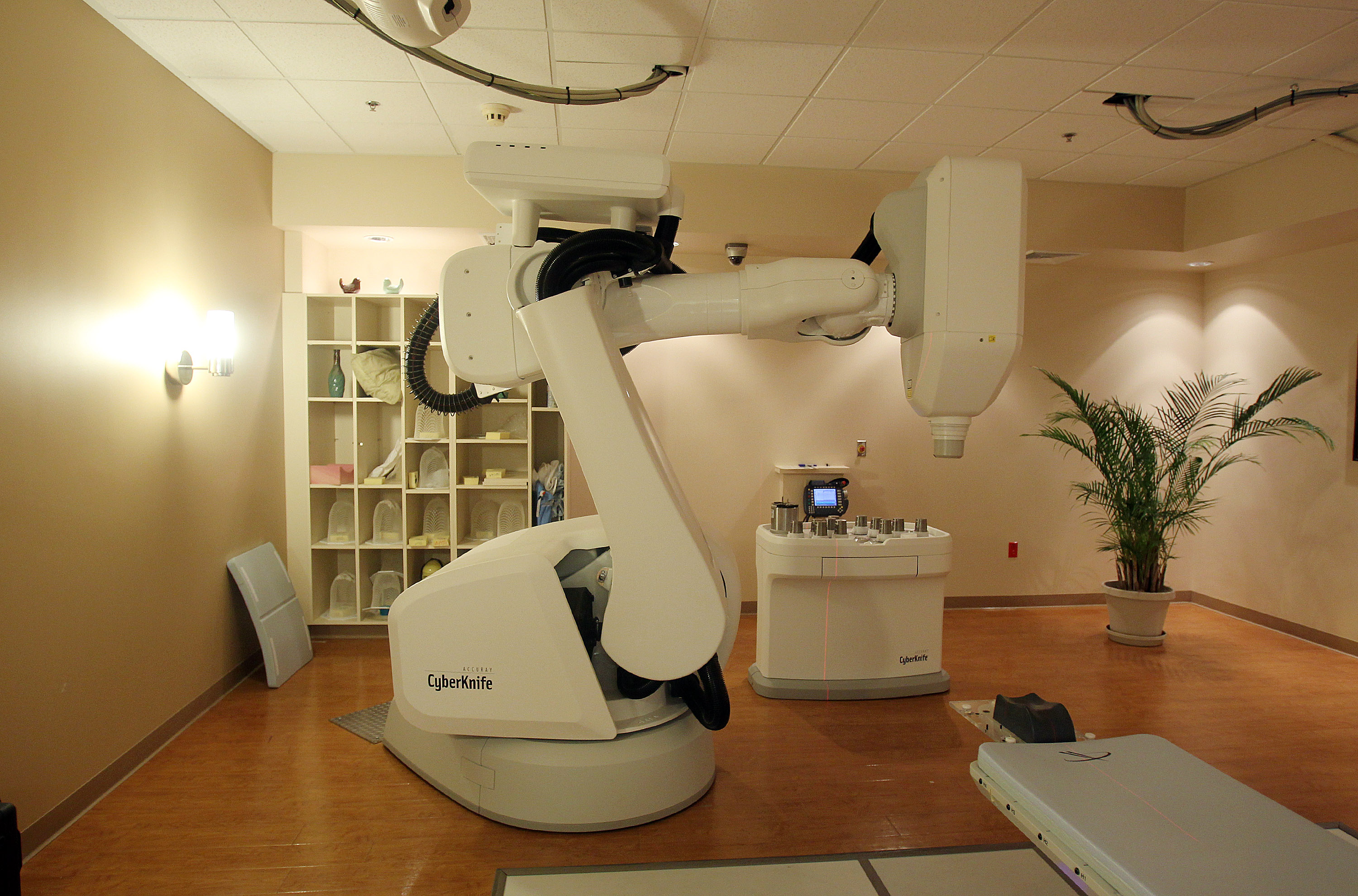
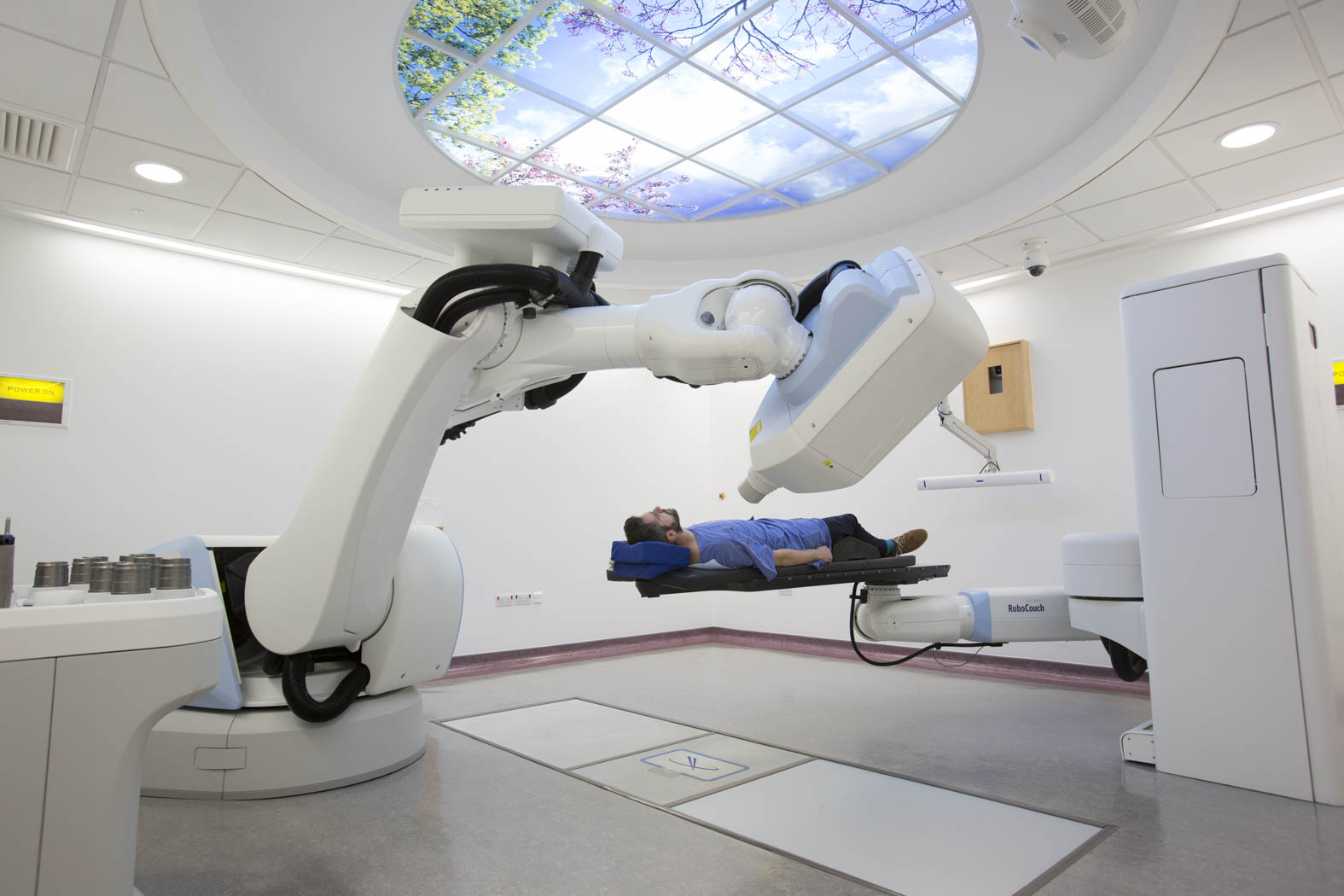
Despite its name, CyberKnife does not involve any surgical incision. It is a form of radiosurgery that uses a compact linear accelerator mounted on a robotic arm to deliver concentrated beams of radiation directly to tumors. The system can reach lesions from hundreds of different angles, and its real-time imaging technology tracks the target continuously, even adjusting for the patient's breathing.
The result is a non-invasive procedure that destroys or shrinks tumors with sub-millimeter accuracy, while sparing the healthy tissue surrounding the target. CyberKnife was originally approved by the FDA in 1999 for tumors of the head, neck, and upper spine, and in 2001 its clearance was expanded to treat tumors anywhere in the body. Today, it is widely used for both cancerous and benign conditions.
How CyberKnife Works
The CyberKnife system integrates three core components: a lightweight linear accelerator (linac), a six-axis robotic arm, and an advanced image guidance system. Before treatment begins, detailed 3D images of the tumor are captured using CT, MRI, or PET scans. These scans are used by the radiation oncology team to build a treatment plan that maps the exact dose, direction, and number of radiation beams required.
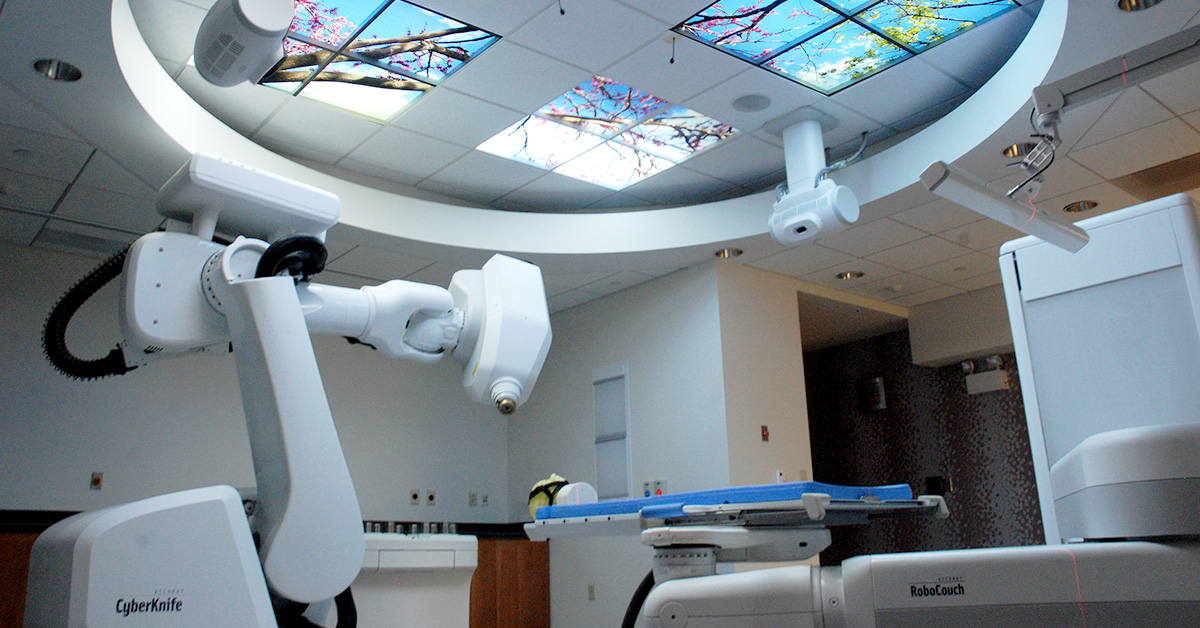
During the session, the robotic arm moves around the patient and delivers radiation from multiple angles, all converging on the tumor. X-ray cameras embedded in the system continuously compare the tumor's real-time position against the pre-treatment images. If the patient shifts slightly or the tumor moves due to breathing, the robot automatically corrects its aim. This level of precision is what makes CyberKnife radiation therapy distinct from conventional radiotherapy, where patients are immobilized in rigid frames and the radiation source remains fixed.
Who Is a Good Candidate for CyberKnife?
Not every patient or tumor type is suitable for CyberKnife. The treatment is most effective for small to medium-sized tumors, and it is particularly valuable for patients who cannot undergo traditional surgery due to age, health status, or the tumor's location. Good candidates typically include:
- Patients with tumors in hard-to-reach areas such as the brain stem, spinal cord, or deep lung tissue
- Individuals who are not eligible for conventional surgery because of other medical conditions (heart disease, clotting disorders, advanced age)
- Patients with recurrent tumors that have already been treated with surgery or standard radiation
- People seeking a non-invasive alternative that requires fewer sessions and shorter recovery
- Patients with benign tumors (e.g., acoustic neuromas, meningiomas, arteriovenous malformations) where surgical risk is high
Your radiation oncologist will evaluate your imaging, medical history, and tumor characteristics to determine whether CyberKnife is the right approach for your specific case.
Conditions Treated with CyberKnife

Brain Tumors
CyberKnife is widely used to treat both primary and metastatic brain tumors, including gliomas, meningiomas, acoustic neuromas, pituitary adenomas, and brain metastases from other cancers. Because the brain is surrounded by critical structures, the sub-millimeter precision of CyberKnife is especially important here. Studies have shown local tumor control rates of up to 90-95% for certain brain lesions treated with stereotactic radiosurgery. For patients exploring options abroad, brain tumour treatment in Turkey offers a range of advanced methods including CyberKnife, Gamma Knife, and microsurgery at accredited hospitals.
Spine Tumors
Spinal tumors are notoriously difficult to treat with open surgery due to the proximity of the spinal cord and nerve roots. CyberKnife allows radiation oncologists to target spinal metastases and primary spinal lesions without the risks of open spinal surgery. The real-time tracking system compensates for slight patient movements, which is critical when treating the spine.
Lung Cancer
Early-stage non-small cell lung cancer (NSCLC) is one of the most common indications for CyberKnife SBRT. The system's Synchrony respiratory tracking feature follows the tumor as it moves with each breath, delivering radiation only when the target is in the correct position. This is especially beneficial for patients who are not candidates for lobectomy or other lung surgeries.
Prostate Cancer
CyberKnife has emerged as an effective option for localized prostate cancer treatment. The entire course of treatment can be completed in just five sessions over about ten days, compared to 37-45 sessions with traditional IMRT. Clinical data shows comparable disease control rates with fewer side effects related to urinary and sexual function.
Liver Tumors
Hepatocellular carcinoma and liver metastases from colorectal cancer or other primaries can be treated with CyberKnife when surgery is not feasible. The system's ability to compensate for respiratory motion is critical in liver treatments, as the organ shifts significantly with each breath.
CyberKnife vs Traditional Radiation Therapy
Conventional external beam radiation therapy (EBRT) delivers radiation over many sessions (typically 25-37 fractions) and uses broader beams that expose more surrounding tissue. CyberKnife stereotactic radiosurgery, by contrast, delivers much higher doses per session in just 1-5 treatments. Key differences include:
- Precision: CyberKnife achieves sub-millimeter accuracy; conventional radiation has a margin of error of several millimeters
- Sessions: CyberKnife requires 1-5 sessions vs. 25-37 for standard EBRT
- Immobilization: No rigid head frame or body cast is needed with CyberKnife; real-time tracking replaces physical restraints
- Healthy tissue exposure: CyberKnife spares significantly more healthy tissue due to its multi-angle beam delivery
- Recovery: Most CyberKnife patients return to normal activities within 1-2 days; conventional radiation can cause cumulative fatigue over weeks
Patients considering radiation-based cancer care may also want to compare CyberKnife with other advanced modalities. Proton therapy is another high-precision option, though it requires larger and more expensive infrastructure.
Advantages of CyberKnife Treatment
CyberKnife offers several clinically meaningful advantages over both open surgery and traditional radiotherapy:
- Non-invasive: No incision, no anesthesia, no blood loss
- Outpatient procedure: Patients go home the same day after each session
- Pain-free: The treatment itself causes no pain during delivery
- Real-time tumor tracking: The robotic system adjusts for patient and tumor movement continuously
- Short treatment course: Most courses are completed within 1-5 sessions, each lasting 30-90 minutes
- Minimal side effects: Because less healthy tissue is irradiated, patients experience fewer and milder side effects
- No recovery downtime: Most patients return to daily activities within a day or two
- Suitable for inoperable tumors: Offers a treatment option for lesions previously considered untreatable
How CyberKnife Treatment Is Performed
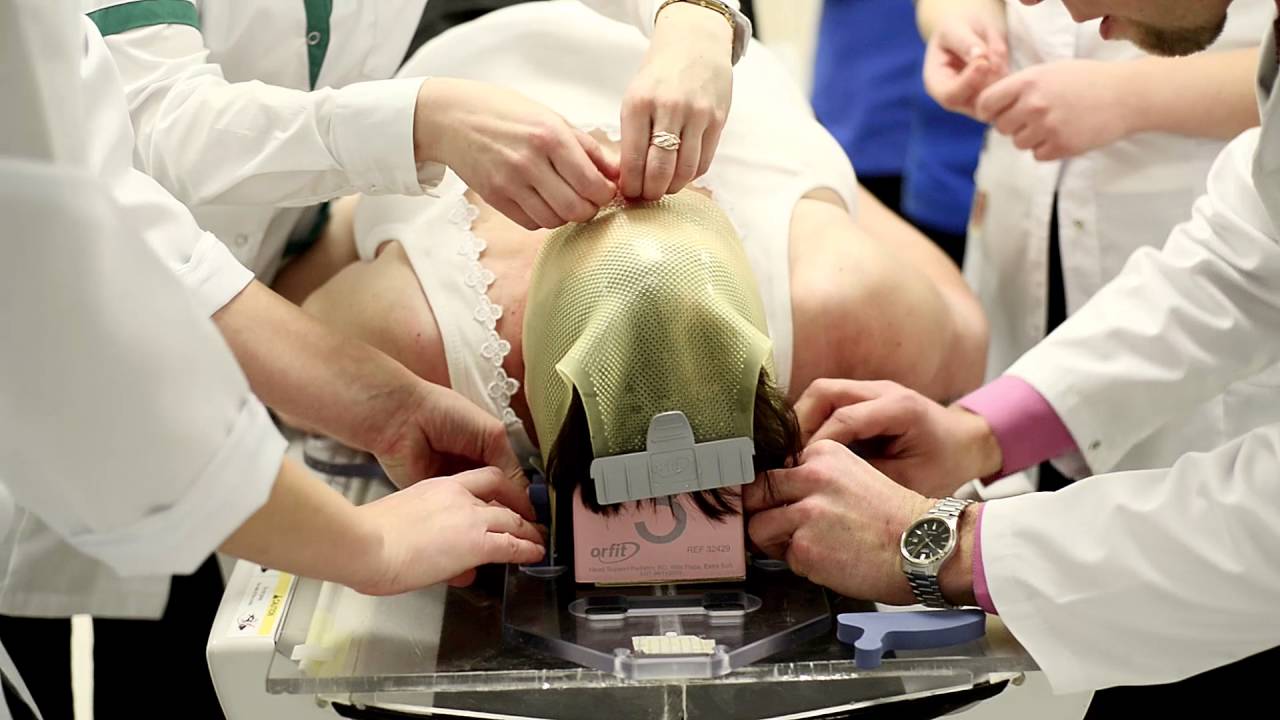
The treatment process begins with a planning phase. During this stage, the patient undergoes high-resolution CT and/or MRI scans so the medical team can create a detailed 3D map of the tumor and surrounding anatomy. For some brain treatments, a custom-fitted thermoplastic mask is created to help with positioning, though no rigid frame is bolted to the skull as with older radiosurgery systems.
On the day of treatment, the patient lies comfortably on the CyberKnife table. The robotic arm begins delivering radiation beams from multiple angles while the image guidance system tracks the tumor's position in real time. Each session typically lasts between 30 and 90 minutes, depending on the size and location of the tumor. There is no pain during the procedure, and patients can listen to music or simply rest.
After the session, patients can usually leave the clinic immediately. There is no need for hospitalization in most cases.
Treatment Duration and Number of Sessions
The number of sessions depends on the tumor type, size, and location. Most treatment plans involve 1 to 5 sessions (fractions), spread over consecutive or alternating days. For example, a single brain metastasis may be treated in just one session, while early-stage lung cancer typically requires 3-5 fractions. Prostate cancer protocols often use 5 sessions delivered over 10-14 days. Each session lasts about 30-90 minutes. The total stay in Turkey for the complete course of CyberKnife treatment is usually 5-10 days from initial consultation to final follow-up.
Recovery After CyberKnife Treatment
Because CyberKnife is non-invasive, recovery is fast. Most patients experience little to no downtime. You may feel mild fatigue or slight soreness in the treated area for a few days, but these effects are typically much less severe than those associated with surgery or conventional radiotherapy. Patients can usually return to work and light physical activity within a few days of completing treatment.
Follow-up imaging (MRI or CT scans) is usually scheduled 4-8 weeks after treatment to assess the tumor's response. Your radiation oncologist will continue to monitor your progress with periodic scans over the following months and years.
Side Effects and Safety of CyberKnife
CyberKnife is considered one of the safest forms of radiation therapy available today. However, as with any medical procedure, side effects can occur. The most commonly reported side effects include:
- Mild fatigue that resolves within a few days
- Localized skin redness or irritation near the treatment site
- Nausea (primarily when treating abdominal or brain tumors)
- Temporary swelling around the treated area
- For prostate treatments: mild urinary frequency or urgency that typically resolves within weeks
Serious complications are rare. The precision of the CyberKnife system means that less healthy tissue is exposed to radiation compared to conventional methods, which directly reduces the risk and severity of side effects.
Success Rates of CyberKnife Treatment
Success rates for CyberKnife vary by tumor type, stage, and location. Published clinical data shows strong outcomes across multiple indications:
- Brain metastases: Local control rates of 85-95% at one year
- Early-stage lung cancer (Stage I NSCLC): Local control rates above 90% at three years
- Prostate cancer: Biochemical disease-free survival rates of approximately 90-95% at five years for low-to-intermediate risk disease
- Spinal tumors: Local control rates of 80-90% depending on histology and prior treatment
- Liver metastases: Local control rates of 70-90% at two years
These results are comparable to surgical outcomes for many tumor types, with the added benefits of lower morbidity and shorter recovery. For patients exploring cancer treatment options abroad, Turkey's best hospitals for cancer treatment combine these results with significant cost savings.
Cost of CyberKnife Treatment in Turkey (2026)
CyberKnife Prices in Turkey
The cost of CyberKnife treatment in Turkey depends on several factors, but typical pricing in 2026 is as follows:
- Brain tumors: $4,800 - $10,000
- Lung cancer: $6,000 - $8,000
- Prostate cancer: $5,000 - $10,000 (5-session course)
- Liver tumors: $6,000 - $9,000
- Spinal tumors: $5,000 - $9,500
Many Turkish hospitals offer bundled packages that include pre-treatment imaging (CT/MRI), treatment planning, the CyberKnife sessions themselves, specialist consultations, and post-treatment follow-up, all at a single transparent price.
Cost Comparison: Turkey vs USA vs UK
|
Tumor Type |
Turkey |
USA |
UK (Private) |
|
Brain Tumors |
$4,800 - $10,000 |
$30,000 - $55,000 |
$12,000 - $25,000 |
|
Lung Cancer |
$6,000 - $8,000 |
$25,000 - $45,000 |
$15,000 - $22,000 |
|
Prostate Cancer |
$5,000 - $10,000 |
$30,000 - $50,000 |
$12,000 - $20,000 |
|
Spine Tumors |
$5,000 - $9,500 |
$25,000 - $40,000 |
$14,000 - $22,000 |
As the table shows, patients can save 60-85% by choosing Turkey over the USA, and 40-60% compared to private treatment in the UK. These savings do not come at the expense of quality, as Turkish hospitals use the same CyberKnife M6 systems found in leading Western cancer centers.
What Affects CyberKnife Cost?
Several factors influence the final price of CyberKnife treatment:
- Tumor type and location: Brain tumors may require different planning complexity than prostate or lung lesions
- Number of sessions: A single-fraction treatment costs less than a 5-session course
- Hospital tier: JCI-accredited hospitals with international patient departments may charge slightly more, but include additional services
- Diagnostic imaging: Pre-treatment MRI and CT scans may be bundled or billed separately
- Additional services: Translation, airport transfers, and accommodation support can affect total cost
Are All-Inclusive Packages Available?
Yes. Many hospitals in Turkey, especially those with established international patient programs, offer all-inclusive CyberKnife packages that cover consultation, imaging, treatment sessions, follow-up, interpreter services, and airport-hotel transfers. Through A-Medical, you can access these packages with full transparency and no hidden fees.
Why Choose Turkey for CyberKnife Treatment?
Advanced Radiation Oncology Centers
Turkey is home to more than 20 hospitals equipped with CyberKnife and Gamma Knife systems. The country has invested heavily in radiation oncology infrastructure, and leading centers operate the latest CyberKnife M6 platform with full Synchrony respiratory tracking. Many of these facilities hold JCI accreditation, which is the gold standard for international hospital quality. Patients who are also considering Gamma Knife surgery in Turkey can discuss both options with their radiation oncologist to determine the best approach for their specific tumor.
Experienced Radiation Oncologists
Turkish radiation oncologists regularly train and collaborate with institutions in Europe and the United States. Many have performed hundreds or even thousands of stereotactic radiosurgery cases. Professors and associate professors at leading Istanbul hospitals publish actively in international journals and participate in clinical trials.
High-Precision Technology
The CyberKnife M6, the most advanced version of the system, is available at multiple hospitals in Turkey. This platform offers 6D robotic precision, real-time image guidance, and Synchrony motion tracking. Some hospitals also combine CyberKnife with TrueBeam STx linear accelerators and 64-slice CT for treatment verification.
Affordable Treatment Options
The cost advantage of receiving CyberKnife treatment in Turkey is significant. Turkey's lower operating costs, favorable exchange rates, and government incentives for medical tourism allow hospitals to offer the same technology and expertise at a fraction of Western prices. This makes advanced radiation therapy accessible to patients who might otherwise be unable to afford it.
International Patient Services
Turkish hospitals are experienced in serving patients from Europe, the Middle East, Central Asia, and Africa. Most major centers have multilingual patient coordinators, on-site interpreters, and partnerships with nearby hotels. From airport pickup to post-treatment follow-up, the process is designed to be straightforward for international visitors.
Best Hospitals for CyberKnife Treatment in Turkey
Anadolu Medical Center

Located on the coast of the Sea of Marmara in Istanbul, Anadolu Medical Center operates in affiliation with Johns Hopkins Hospital (USA). The center holds JCI, ESMO, and OECI accreditations. CyberKnife radiosurgery at Anadolu achieves 0.5mm targeting accuracy, and packages typically include treatment planning, the radiosurgery procedure, and medical consultation. Pricing for CyberKnife for brain tumors at Anadolu generally ranges from $6,000 to $9,000.
Memorial Sisli Hospital

Memorial Sisli was the first hospital in Turkey to receive JCI accreditation. Its radiation oncology department uses both CyberKnife and TrueBeam STx technology with 64-slice CT guidance. Prof. Dr. Zuleyha Akgun, one of the department's senior oncologists, has performed over 900 CyberKnife procedures. Treatment packages at Memorial typically cost around $5,700-$7,900, including the procedure, interpreter, and transfers.
Medipol Mega University Hospital

Medipol Mega is a JCI Academic Accredited hospital with 810 beds and 35 operating rooms. It offers both Gamma Knife and CyberKnife systems, providing the oncology team flexibility in treatment planning. CyberKnife packages here are among the most competitively priced in Istanbul, starting at approximately $3,800 for a 3-session course and $5,000 for a 5-session course. Packages typically include specialist consultation, MRI/CT imaging, and a customized treatment plan.
How A-Medical Can Help?
A-Medical is a medical tourism company that connects international patients with Turkey's leading hospitals and doctors. If you are considering CyberKnife treatment in Turkey, our team can manage the entire process from your first inquiry to your return home. Here is what we offer:
- No waiting lists: We arrange appointments within days, not weeks or months
- Fast scheduling: Your consultation, imaging, and treatment sessions are coordinated so you spend minimal time away from home
- Hospital and doctor matching: We connect you with the most appropriate clinic and radiation oncologist based on your diagnosis and needs
- Affordable pricing: We negotiate directly with hospitals to offer transparent, competitive rates with no hidden fees
- Accommodation support: We help arrange comfortable hotels near your treatment hospital
- Interpreter services: Multilingual coordinators and translators are available throughout your stay
- Airport and hospital transfers: Ground transportation is organized from the moment you land to the moment you depart
- Post-treatment follow-up: We stay in touch after your treatment to help coordinate any follow-up imaging or consultations you may need
Ready to explore your options? Contact A-Medical today for a free consultation and a detailed treatment plan based on your medical records. We will connect you with the right hospital and help you access CyberKnife radiosurgery in Turkey quickly, safely, and affordably.
Frequently Asked Questions
Is CyberKnife treatment painful?
No, CyberKnife treatment is pain-free. The radiation beams are delivered without any physical contact, and patients do not feel anything during the procedure. Some patients may experience mild fatigue or localized discomfort in the treated area after the session, but this typically resolves within a few days.
How many CyberKnife sessions do I need?
The number of CyberKnife sessions depends on the tumor type, size, and location. Most treatment plans require 1 to 5 sessions. A single brain metastasis may be treated in one session, while prostate cancer typically requires 5 sessions spread over 10-14 days.
Can CyberKnife treat inoperable tumors?
Yes, CyberKnife is specifically designed to treat tumors that are difficult or impossible to remove with traditional surgery. Its robotic arm can target lesions in the brain stem, spinal cord, lungs, and other locations where surgical access is limited or the risk of complications is too high.
How long does each CyberKnife session last?
Each CyberKnife session typically lasts between 30 and 90 minutes, depending on the tumor's size, shape, and location. Brain tumors may be treated in shorter sessions, while larger or more complex lesions may require longer treatment times.
Is CyberKnife better than Gamma Knife?
Both CyberKnife and Gamma Knife are forms of stereotactic radiosurgery, but they work differently. Gamma Knife uses cobalt-60 sources and is limited to treating brain and upper neck lesions, while CyberKnife uses a robotic linear accelerator and can treat tumors anywhere in the body. CyberKnife also does not require a rigid head frame to be screwed into the skull. The choice between the two depends on the tumor's location and the recommendation of your radiation oncologist.
What is the success rate of CyberKnife for brain tumors?
CyberKnife has shown local tumor control rates of 85-95% for brain metastases and similarly high rates for benign brain tumors like meningiomas and acoustic neuromas. The success rate for a specific case depends on factors such as tumor size, histology, and whether the patient has received prior treatment.
Conclusion
CyberKnife is a proven, non-invasive radiation therapy that offers real clinical benefits for patients with tumors in the brain, spine, lungs, prostate, liver, and other areas. It delivers high-dose radiation with sub-millimeter precision, typically in just 1-5 sessions, with minimal side effects and virtually no recovery time. For international patients, CyberKnife treatment in Turkey represents a powerful combination of advanced technology, experienced oncologists, and prices that are 60-85% lower than in the USA and 40-60% lower than private treatment in the UK.
If you or someone you know is facing a tumor diagnosis and exploring treatment options, A-Medical can help you connect with the right hospital and doctor in Turkey. From your first inquiry to your return home, we are here to make the process as smooth and stress-free as possible.
Get in touch with A-Medical to receive a free, no-obligation quote for CyberKnife radiosurgery in Turkey. Send us your medical records and our team will provide you with a treatment plan, hospital recommendations, and a transparent cost estimate within 48 hours.