
Contents
Best and cheapest countries for pancreas transplant abroad matters because a procedure that costs over $500,000 in the United States can drop to a fraction of that price in destinations such as India, Turkey, and Mexico. A pancreas transplant restores natural insulin production in people with type 1 diabetes, and around 84 percent of all procedures performed worldwide are the simultaneous pancreas-kidney type (OPTN/SRTR, 2024). This guide ranks the countries that combine accredited transplant centers, experienced surgical teams, and clear pricing, then breaks down the real total cost a patient should plan for.
|
Quick Facts: Average cost in the United States: $300,000 to $800,000 for a pancreas transplant Average cost in top affordable destinations: $25,000 to $100,000 depending on country and transplant type Most common transplant type: Simultaneous pancreas-kidney (SPK), about 84 percent of cases One-year graft survival (SPK): Around 85 to 87 percent at experienced centers (UNOS/IPTR) Primary candidate: People with type 1 diabetes, often with kidney failure Top affordable destinations: India, Turkey, Mexico, Thailand, South Korea, Spain |
Why Patients Consider a Pancreas Transplant Abroad

Two forces push patients toward treatment overseas. The first is price. A pancreas transplant in the United States runs into the hundreds of thousands of dollars once you count the surgery, hospital stay, and the first months of medication. The same operation at an accredited hospital in India or Turkey often costs less than a quarter of that figure.
The second force is waiting time. Deceased-donor organ queues in many Western countries stretch for years, and a patient with worsening diabetic complications cannot always afford to wait. Some destinations process eligible international cases faster, though donor-organ rules differ sharply by country and deserve careful checking.
Pancreas Transplant Cost by Country
The figures below reflect 2024 to 2026 pricing for a pancreas transplant abroad at accredited private centers. Costs cover the surgery, hospital stay, and standard pre-operative work-up. They usually exclude flights, accommodation for family, and the lifelong cost of immunosuppressant drugs.
|
Country |
SPK (Pancreas-Kidney) |
Pancreas Alone (PTA) |
Savings vs USA |
|---|---|---|---|
|
India |
$25,000 – $45,000 |
$22,000 – $31,000 |
Up to 90% |
|
Turkey |
$45,000 – $90,000 |
$40,000 – $70,000 |
Up to 80% |
|
Mexico |
$50,000 – $90,000 |
$40,000 – $75,000 |
Up to 75% |
|
Thailand |
$60,000 – $110,000 |
$50,000 – $90,000 |
Up to 70% |
|
South Korea |
$80,000 – $140,000 |
$70,000 – $120,000 |
Up to 60% |
|
Spain |
$90,000 – $150,000 |
$80,000 – $130,000 |
Up to 55% |
|
United States |
$300,000 – $800,000 |
$250,000 – $500,000 |
Baseline |
Sources: Patients Beyond Borders (2024), Statista (2024), and published private-hospital estimates. Prices are estimates and shift with the patient's case complexity and exchange rates.
The Best and Cheapest Countries for a Pancreas Transplant
The ranking below weighs three things together: the total price, the accreditation and track record of transplant centers, and how realistic it is for an international patient to actually receive a donor organ. A low headline price means little if the donor pathway is closed to non-residents.
India

India offers the lowest pancreas transplant prices among major destinations, with a simultaneous pancreas-kidney procedure starting near $25,000 to $30,000 (Patients Beyond Borders, 2024). JCI-accredited hospitals in Delhi, Mumbai, Chennai, and Bangalore run established transplant programs with surgeons trained in Western centers. India works best for patients who already have a related living donor for the kidney portion, since this sidesteps the deceased-donor queue.
Average cost: $25,000 to $45,000 (SPK). Main hubs: Delhi, Mumbai, Chennai, Bangalore. Accreditation: JCI, NABH.
Turkey

Turkey combines modern hospitals with prices well below European and American levels, with a pancreas transplant generally costing $45,000 to $90,000 against more than $200,000 in many Western countries. Istanbul and Ankara host high-volume transplant units, and the country's broader medical tourism system handles international patients smoothly from arrival to follow-up. One-year outcomes at leading Turkish centers sit around 85 to 90 percent for blood-sugar control.
Average cost: $45,000 to $90,000 (SPK). Main hubs: Istanbul, Ankara. Accreditation: JCI, USHAS oversight.
Turkey runs a deep transplant ecosystem beyond the pancreas. Patients often pair their research with our guide to kidney transplant in Turkey, since pancreas-kidney cases depend on a strong renal program. Those weighing related options can also review pancreas surgery in Turkey for non-transplant procedures.
Mexico

Mexico appeals to patients from the United States and Canada because of short travel distance and prices in the $50,000 to $90,000 range. Monterrey, Guadalajara, and Mexico City have private hospitals with transplant capability and accredited intensive care. Proximity also makes post-operative check-ups easier than a long-haul trip to Asia.
Average cost: $50,000 to $90,000 (SPK). Main hubs: Monterrey, Guadalajara, Mexico City. Accreditation: JCI, CSG (national).
Thailand
Thailand built its reputation on hospitality and accredited care, with Bangkok hospitals such as the large private groups handling complex surgery for international patients. Pancreas transplant pricing typically falls between $60,000 and $110,000. Thailand suits patients who want a single coordinated package covering surgery, recovery, and aftercare.
Average cost: $60,000 to $110,000 (SPK). Main hubs: Bangkok, Phuket. Accreditation: JCI.
South Korea

South Korea sits at the higher end of the affordable bracket but offers some of the strongest surgical outcomes outside the West. Seoul's major university hospitals report graft survival rates that match top global centers. Expect $80,000 to $140,000, a fair trade for patients who prioritize the technical edge over the lowest price.
Average cost: $80,000 to $140,000 (SPK). Main hubs: Seoul. Accreditation: JCI, KOIHA.
Spain

Spain deserves attention because it leads the world in deceased-organ donation rates, which shortens the practical wait for a donor pancreas. Prices of $90,000 to $150,000 are higher than Asian options but still well under American figures, and Spanish transplant medicine ranks among Europe's best. Donor-organ access for non-residents is restricted, so patients must confirm eligibility early.
Average cost: $90,000 to $150,000 (SPK). Main hubs: Madrid, Barcelona. Accreditation: JCI, ONT framework.
Types of Pancreas Transplant and What They Cost
The price and the expected outcome both depend on which of the three procedures a patient needs. Surgeons match the type to the patient's kidney status and the severity of their diabetes.
|
Type |
Who It Suits |
1-Year Graft Survival |
|---|---|---|
|
SPK (Simultaneous Pancreas-Kidney) |
Type 1 diabetes with kidney failure; both organs from one donor |
About 85 to 87% |
|
PAK (Pancreas After Kidney) |
Patients who already received a kidney transplant |
About 79 to 80% |
|
PTA (Pancreas Transplant Alone) |
Severe blood-sugar swings without kidney disease |
About 76 to 79% |
Source: United Network for Organ Sharing and International Pancreas Transplant Registry (UNOS/IPTR). SPK carries the strongest results because the transplanted kidney gives doctors an early warning sign of rejection.
What the Total Cost Really Includes
The headline surgery price is only part of the bill. A realistic budget for a pancreas transplant abroad should account for several layers, and skipping any one of them leads to surprises later.
- Surgery and hospital stay, which is the figure most quotes refer to.
- Pre-operative evaluation, including tissue matching, imaging, and cardiac clearance.
- Immunosuppressant medication, which continues for life and runs into thousands of dollars per year.
- Flights and accommodation for the patient and at least one family member, often for several weeks.
- Follow-up visits and lab monitoring during the critical first months after surgery.
When patients add these layers together, a $30,000 surgical quote in India often becomes a $40,000 to $50,000 total commitment in the first year. That figure still beats Western pricing by a wide margin, but planning for it avoids financial stress during recovery.
How to Plan a Pancreas Transplant Abroad
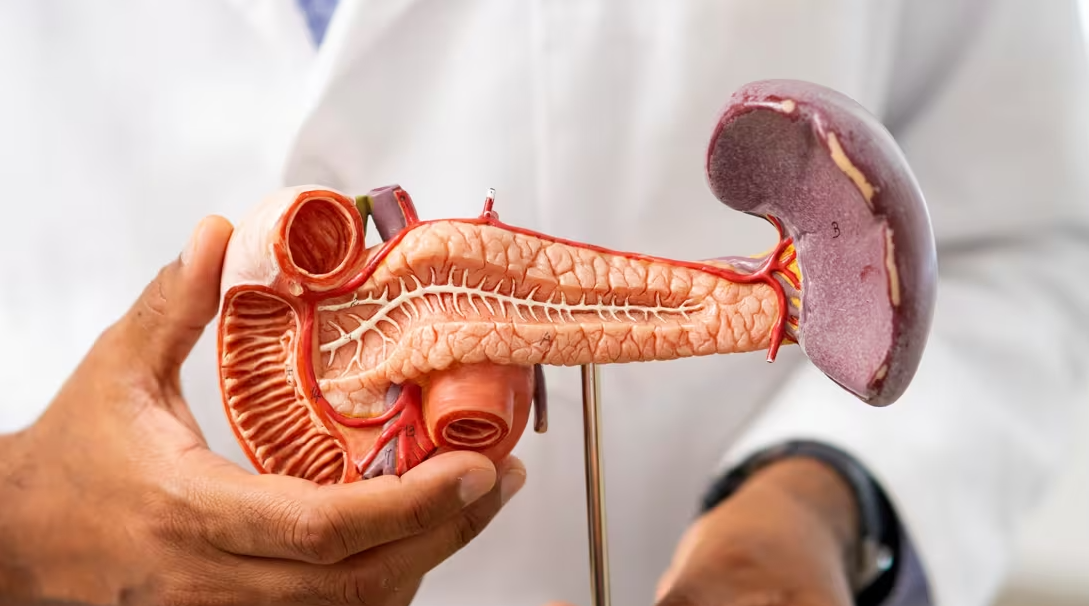
A clear sequence keeps a complex process manageable. The steps below reflect how successful international cases typically unfold.
- Confirm your transplant type with your home doctor, since SPK, PAK, and PTA each point to different centers.
- Gather your full medical file, including diabetes history, kidney function, and recent imaging.
- Shortlist accredited centers in two or three countries and request written quotes that list inclusions.
- Verify the donor-organ pathway for international patients in writing before booking any travel.
- Complete tissue matching and pre-operative tests, where possible before you travel.
- Plan a stay of three to six weeks and arrange follow-up monitoring for the months after surgery.
Healthcare Quality and Accreditation Standards
Accreditation is the clearest signal of safety for an international patient. The marks below tell you a hospital meets recognized standards, though they do not replace asking about a center's specific transplant results.
|
Accreditation |
What It Means |
|---|---|
|
JCI (Joint Commission International) |
The most widely recognized global standard for patient safety and care quality |
|
NABH |
India's national hospital accreditation, common at its transplant centers |
|
ISO |
International quality-management certification covering hospital processes |
|
TEMOS |
A standard focused specifically on care for international and mobile patients |
|
USHAS |
Turkey's health-tourism authority overseeing accredited international care |
Risks and What to Watch For
A pancreas transplant carries real risks that patients should weigh honestly against the benefits. Rejection remains the central concern, and lifelong immunosuppressant drugs raise the risk of infection. Surgical complications include blood clots in the vessels feeding the new pancreas and inflammation of the transplanted organ.
Treatment abroad adds its own considerations. Continuity of care can break if a complication appears after the patient flies home, so a clear handover plan with a local specialist matters. Donor-organ legality varies, and patients should avoid any arrangement that cannot account transparently for where the organ comes from.
Plan Your Pancreas Transplant Abroad with A-Medical
Navigating a pancreas transplant in another country involves far more than finding a hospital. At A-Medical, we handle the entire process alongside you, from the first inquiry to the moment you return home, so you can focus entirely on your health.
We work with accredited transplant centers across India, Turkey, Mexico, Thailand, South Korea, and Spain, and we match each patient to the facility that fits their medical profile, budget, and timeline, not simply the nearest or most marketed option.
What A-Medical provides:
- Patient-to-clinic matching based on your diagnosis, transplant type (SPK, PAK, or PTA), and medical history
- Doctor appointment scheduling and coordination with transplant teams
- Best-price negotiation directly with partner hospitals on your behalf
- Pre-travel document preparation and medical record submission to the receiving center
- Preliminary online consultation with the treating physician before you travel
- Full travel planning support, including flight guidance and itinerary coordination
- Accommodation arrangements close to the hospital for you and your companion
- Airport and inter-city transfer organization throughout your stay
- Interpreter support in the hospital and during all medical appointments
Every service is handled by a dedicated case coordinator who stays with your file from start to finish. There are no handoffs to call centers, no generic checklists, just one point of contact who knows your case.
If you are considering a pancreas transplant abroad and want to understand your options before committing to anything, reach out to A-Medical for a no-obligation consultation.
Final Thoughts
Choosing among the best and cheapest countries for pancreas transplant abroad comes down to balancing three things: a price you can afford, a center with proven results, and a donor-organ pathway that is genuinely open to you. India and Turkey offer the strongest savings, while Spain and South Korea lead on outcomes and donor systems. Whichever destination fits your case, the right preparation, accredited care, and a clear follow-up plan matter more than the headline figure.
Frequently Asked Questions
Which country is the cheapest for a pancreas transplant?
India offers the lowest prices, with a simultaneous pancreas-kidney transplant starting near $25,000 to $30,000. Turkey and Mexico follow, both well below Western pricing.
Is a pancreas transplant abroad safe?
It can be, provided you choose an accredited high-volume center and confirm its graft survival results. The biggest safety factors are the surgical team's experience and a transparent donor-organ pathway.
How much does a pancreas transplant cost compared to the United States?
A procedure that costs $300,000 to $800,000 in the United States often costs $25,000 to $110,000 at accredited centers in India, Turkey, Mexico, or Thailand, a saving of 60 to 90 percent.
What is the success rate of a pancreas transplant?
One-year graft survival is about 85 to 87 percent for simultaneous pancreas-kidney transplants and slightly lower for the pancreas-alone procedure, based on UNOS and IPTR registry data.
Can international patients receive a donor organ abroad?
Rules vary widely by country. Some destinations restrict deceased-donor organs to residents, so patients should confirm eligibility in writing before traveling, especially in Spain and South Korea.
What is the difference between SPK, PAK, and PTA?
SPK transplants a pancreas and kidney together, PAK adds a pancreas after an earlier kidney transplant, and PTA transplants the pancreas alone for patients without kidney disease. SPK has the strongest outcomes.
Does insurance cover a pancreas transplant abroad?
Most domestic insurers do not cover elective treatment overseas, though some international and self-funded plans do. Confirm coverage and reimbursement rules with your provider before booking.
How long is recovery after a pancreas transplant?
Patients usually stay in hospital for two to three weeks, then need close monitoring for several months. Most plan a total trip of three to six weeks abroad.