Contents
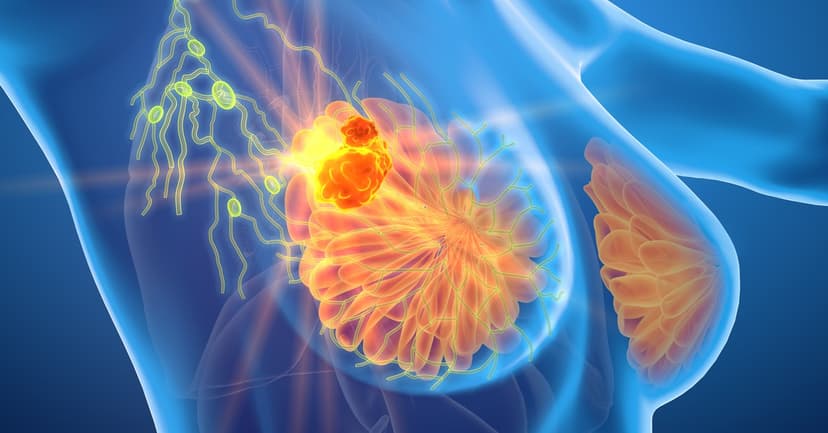
Stage 4 breast cancer, also called metastatic breast cancer, is breast cancer that has spread beyond the breast and nearby lymph nodes to distant organs such as the bone, liver, lung, or brain. At this stage, treatment usually aims to control disease, extend survival, reduce symptoms, and preserve quality of life rather than achieve cure.
Breast cancer remains one of the most relevant global oncology topics. In 2025, the American Cancer Society estimated 316,950 new invasive breast cancer cases in the United States. In the UK, projections suggest roughly 69,900 to 70,300 new cases per year by 2038 to 2040. Stage 4 disease may appear as de novo metastatic breast cancer at first diagnosis, or it may develop later after earlier-stage disease recurs at distant sites.
Key points:
- Stage 4 breast cancer treatment options depend heavily on subtype, metastatic pattern, prior treatment, and pace of progression.
- The most important biologic groups are hormone receptor positive, HER2 positive, HER2-low, and triple-negative metastatic breast cancer.
- Modern treatment often includes chemotherapy, hormone therapy, targeted therapy, immunotherapy, antibody-drug conjugates, and supportive care.
- Stage 4 disease can go into remission, but remission is not the same as cure.
- For international patients, the best hospitals for stage 4 breast cancer treatment is usually the one that matches the tumor biology and treatment sequence, not simply the most famous name.
What Is Stage 4 Breast Cancer
Stage 4 breast cancer means the disease has spread to distant organs or tissues. This makes it biologically different from localized or regional disease because cancer control now depends mainly on systemic treatment, not only local treatment.
In practical terms, stage 4 breast cancer is not one uniform diagnosis. Some patients have bone-only metastatic disease with slower progression. Others present with extensive liver, lung, or brain metastases and need faster, more aggressive systemic control.
How Stage 4 Breast Cancer Differs From Earlier Stages
Earlier-stage breast cancer is usually treated with curative intent. Stage 4 disease is treated with the goal of long-term control, symptom relief, and preservation of function.
This changes the order of treatment priorities. In earlier stages, surgery often leads the plan. In stage 4 disease, systemic therapy usually becomes the backbone because cancer cells are already present beyond the breast. Local treatments such as surgery and radiation may still help, but they are usually selected for symptom control, local complications, or carefully chosen limited metastatic settings.
What Symptoms Can Occur in Stage 4 Breast Cancer
Symptoms depend mainly on where the cancer has spread and how much disease is present.
- Bone metastases may cause pain, fracture risk, spinal instability, or nerve compression.
- Liver metastases may cause fatigue, nausea, abdominal fullness, weight loss, or abnormal liver tests.
- Lung or pleural disease may lead to cough, shortness of breath, chest discomfort, or pleural effusion.
- Brain metastases may cause headaches, seizures, weakness, balance problems, or cognitive change.
Some patients remain relatively well despite visible metastatic disease on imaging. Others deteriorate quickly due to organ compromise. That is why symptoms, scan burden, and prognosis do not always move together.
How Stage 4 Breast Cancer Is Diagnosed and Evaluated
A strong metastatic workup does more than confirm spread. It defines the biology of the disease and shapes the treatment sequence.
The key evaluation questions include:
- Is the tumor hormone receptor positive or hormone receptor negative?
- Is it HER2 positive, HER2-low, or HER2 negative?
- Is the cancer triple negative?
- Is the metastatic pattern mainly bone-only, visceral, brain, or mixed?
- Is the disease progressing slowly or rapidly?
- Has the receptor profile changed compared with the original tumor?
Workup often includes biopsy of metastatic tissue when feasible, CT or MRI staging, bone assessment, and in many centers PET CT. Genetic testing also matters. In metastatic breast cancer, testing for BRCA1, BRCA2, and sometimes PIK3CA can directly influence treatment options, especially when PARP inhibitors or pathway-specific targeted therapies are being considered.
Standard Treatment Options for Stage 4 Breast Cancer
Standard treatment remains the backbone of metastatic care. The core goal is to achieve the best possible disease control with a toxicity burden the patient can sustain over time.
Chemotherapy
Chemotherapy is often used for stage 4 breast cancer when disease is symptomatic, fast-growing, visceral, or no longer controlled by more selective treatments. It can shrink disease relatively quickly, which makes it especially relevant in high-burden or urgent situations.
Commonly used drugs may include capecitabine, paclitaxel, docetaxel, eribulin, vinorelbine, and anthracycline-based regimens in selected settings. Chemotherapy can be effective, but it also carries substantial toxicity, including fatigue, neuropathy, low blood counts, nausea, mucositis, and infection risk. In stage 4 disease, the question is not only whether chemotherapy works, but whether its benefit justifies its effect on daily life.
Hormone Therapy
Hormone therapy is a central treatment for hormone receptor positive metastatic breast cancer. It works by reducing estrogen signaling or blocking hormone receptor activity, which can slow cancer growth significantly in endocrine-sensitive disease.
Common endocrine treatments include letrozole, anastrozole, exemestane, fulvestrant, and ovarian suppression in selected premenopausal patients. In modern practice, hormone therapy is often combined with CDK4/6 inhibitors such as palbociclib (Ibrance), ribociclib (Kisqali), and abemaciclib (Verzenio). These combinations have become some of the most important first-line strategies in HR positive and HER2 negative metastatic disease.
Targeted Therapy
Targeted therapy is used when tumor biology reveals a specific treatment vulnerability. In stage 4 breast cancer, this is especially important in HER2 positive disease and selected endocrine-sensitive or mutation-driven settings.
In HER2 positive metastatic breast cancer, important drugs include trastuzumab (Herceptin), pertuzumab (Perjeta), tucatinib (Tukysa), lapatinib, and neratinib in selected settings. In mutation-guided treatment, other important agents include alpelisib (Piqray) for PIK3CA-mutated HR positive disease and everolimus (Afinitor) in selected endocrine-resistant settings.
This category now also includes PARP inhibitors such as olaparib (Lynparza) and talazoparib (Talzenna) for patients with germline BRCA1 or BRCA2 mutations. That is why genetic testing is no longer optional background information. It can directly shape treatment choice.
Immunotherapy
Immunotherapy works by helping the immune system recognize and attack tumor cells more effectively. In breast cancer, its role is much more selective than in some other cancers.
It is most relevant in specific metastatic triple-negative breast cancer settings, often when biomarker support such as PD-L1 expression is present. Important drugs include pembrolizumab (Keytruda) and, in some past or specific contexts, atezolizumab (Tecentriq). Immunotherapy is usually not used alone. It is more often combined with chemotherapy or used in a clearly selected biologic setting.
Radiation Therapy
Radiation therapy is often used for local symptom control rather than broad systemic control. It can be highly effective for painful bone lesions, brain metastases, chest wall recurrence, bleeding, or spinal cord compression risk.
Modern practice may involve conventional external-beam therapy, stereotactic techniques, or more focused palliative planning depending on the case. Radiation does not usually change the whole-body metastatic biology, but it can make an enormous difference in comfort, mobility, and neurologic safety.
Surgery in Selected Cases
Surgery has a narrower role in stage 4 disease than in earlier stages, but it still matters in selected situations. It may help with ulceration, bleeding, wound complications, pain, infection, or carefully chosen oligometastatic settings.
The scientific point is that surgery is not the routine backbone of stage 4 disease. Its value is contextual. It is useful when it solves a clear local problem or fits within a multidisciplinary plan that still makes oncologic sense.
Stage 4 Breast Cancer by Subtype
Subtype is one of the strongest predictors of treatment logic and outcome.
Hormone Receptor Positive Metastatic Breast Cancer
This group often has the broadest endocrine-based treatment options and may show a slower disease course, especially in bone-dominant settings. Common first-line treatment often includes endocrine therapy plus a CDK4/6 inhibitor.
HER2 Positive Metastatic Breast Cancer
This subtype has seen major progress because of HER2-directed therapy. Treatment frequently involves trastuzumab, pertuzumab, later-line HER2-targeted drugs, and increasingly important antibody-drug conjugates.
HER2-Low Breast Cancer
HER2-low breast cancer has become a clinically important category because it opened access to newer targeted options, especially fam-trastuzumab deruxtecan (Enhertu). This is one of the most significant recent developments in metastatic breast cancer treatment and should not be ignored in any modern treatment guide.
Triple-Negative Metastatic Breast Cancer
This subtype is often more aggressive and has fewer standard long-duration options than HR positive disease. However, treatment is evolving. Important modern approaches may include chemotherapy, pembrolizumab in selected biomarker-defined cases, and antibody-drug conjugates such as sacituzumab govitecan (Trodelvy).
Management of Breast Cancer at Advanced Stages
Advanced-stage management is not only about shrinking tumors. It is also about preserving function, reducing symptom burden, and maintaining the ability to continue treatment.
Symptom Control and Palliative Care
Palliative care is not the opposite of active treatment. In metastatic oncology, it is part of good care. It may include nausea control, wound care, fatigue management, bowel support, sleep help, and structured symptom planning.
Pain Management and Quality of Life
Pain may arise from bone metastases, nerve compression, chest wall disease, or prior treatment effects. Good management may involve analgesics, radiation, rehabilitation, interventional support, and bone-specific treatment.
In bone metastases, bisphosphonates and denosumab (Xgeva) are important because they can reduce skeletal complications and help protect quality of life over time.
Nutritional and Psychological Support
Advanced cancer affects appetite, weight, sleep, mood, and treatment tolerance. Dietitian support and psychological care are not decorative additions. They help patients maintain strength, cope better, and stay engaged with treatment.
Ongoing Monitoring and Treatment Adjustment
Stage 4 treatment is dynamic. Scans, symptoms, labs, side effects, and evolving tumor biology all change what comes next. One patient may stay stable for years on one line of therapy. Another may need rapid sequencing changes after early resistance.
This is why the best metastatic centers are good at repeated reassessment, not only at giving an impressive first consultation.
Innovative Methods of Treating Stage 4 Breast Cancer
Innovative approaches may help in selected settings, but their role must be interpreted carefully. Most are not replacements for systemic therapy. Their strongest use is usually in local control, symptom palliation, or carefully selected multimodal strategies.
Interventional Radiology for Stage 4 Breast Cancer
Interventional radiology becomes especially relevant in focal metastatic patterns, particularly liver-dominant disease. Methods such as thermal ablation, HIFU, LITT, cryoablation, and selected regional infusion techniques may improve local control in properly chosen patients.
This matters because not all stage 4 disease is diffusely spread in the same way. Some patients have a limited number of lesions in one organ that may benefit from highly focused local treatment alongside systemic therapy.
Electrochemotherapy in Selected Cases
Electrochemotherapy uses electrical pulses to increase cell membrane permeability and enhance intracellular chemotherapy delivery. In selected unresectable chest wall or cutaneous recurrences, strong local response rates have been reported.
Its value is local, not systemic. It is most relevant for patients whose main burden is chest wall progression, skin metastases, ulceration, or difficult local recurrence that cannot be managed easily with standard surgery or radiation.
Dendritic Cell Therapy and Other Emerging Approaches
Dendritic cell therapy has a real biologic rationale because dendritic cells help activate T-cell immunity. Early studies in HER2-related vaccine approaches show feasibility and safety, but these methods remain investigational rather than standard metastatic care.
This is one of the areas where patients need to separate scientific possibility from current clinical standard. The right question is not whether a treatment sounds advanced. The right question is whether it is being offered in a meaningful biologic context with realistic expectations.
Hyperthermia in Comprehensive Cancer Care
Hyperthermia has a more established role than many patients expect, but it is still narrow in indication. It is most credible as a local adjunct, especially in selected recurrent breast-cancer settings where it may improve response to radiation.
It should not be presented as a universal anti-metastatic treatment. Its stronger role is as a focused treatment enhancer in locoregional disease.
Clinical Trials for Stage 4 Breast Cancer
Clinical trials are an important part of metastatic breast cancer care and should be discussed more often than they are. They can matter especially when:
- Standard options are running out
- The disease has uncommon biology
- The patient has HER2-low, BRCA-mutated, or other molecularly interesting disease
- A center offers investigational access to new drugs, ADCs, immunotherapies, or novel combinations
For some patients, a high-level center is valuable not because it offers a “miracle” treatment, but because it gives access to a serious clinical trial pathway when standard lines begin to fail.
Can Stage 4 Breast Cancer Go Into Remission
Yes, stage 4 breast cancer can go into remission, sometimes for long periods. In practical terms, remission may mean scans become quiet or disease remains clinically controlled under treatment.
But remission is not the same as cure. In metastatic breast cancer, the more scientifically honest treatment goal is usually durable control, not permanent eradication.
Survival Rates and Life Expectancy in Stage 4 Breast Cancer
Patients often search for stage 4 breast cancer survival rate or life expectancy, but there is no single survival number that applies to everyone. Outcome depends on subtype, metastatic sites, treatment responsiveness, performance status, and whether the disease remains biologically controllable over time.
A commonly cited benchmark is that the 5-year relative survival rate for metastatic breast cancer is around 31%. That number is useful only as a population estimate. It does not predict the outcome of one individual patient. Some patients live much shorter periods, while others live for many years, especially when the disease is endocrine sensitive, HER2 targeted, or limited in burden.
What Factors Affect Prognosis and Survival in Stage 4 Breast Cancer
Prognosis depends on a combination of variables:
- Tumor Subtype, especially HR status and HER2 status
- Metastatic Sites, with bone-only disease often behaving differently from liver, lung, or brain disease
- Tumor Burden and pace of progression
- Response To First-Line Therapy
- Performance Status
- Visceral Crisis versus indolent pattern
- Access To Sequential Lines Of Treatment
- Genetic Findings, including BRCA and other actionable pathways
In general, prognosis tends to be more favorable in endocrine-sensitive HR positive disease and in some HER2 positive cases responding well to modern targeted therapy, while it is often more difficult in rapidly progressive triple-negative metastatic disease.
Stage 4 Breast Cancer Treatment Options: Comparative Characteristics
| Treatment Option | Main Role | Best Clinical Use | Main Strength | Main Limitation |
|---|---|---|---|---|
| Chemotherapy | Systemic Disease Control | Visceral Burden, Rapid Progression, Endocrine-Resistant Disease | Faster Cytoreduction | High Toxicity Burden |
| Hormone Therapy | Systemic Control | HR Positive Disease Without Visceral Crisis | Better Tolerability | Not Useful In HR Negative Tumors |
| Targeted Therapy | Biology-Specific Control | HER2 Positive Or Other Targetable Biology | Precision-Based Strategy | Still Carries Significant Adverse Effects |
| Immunotherapy | Immune Activation | Selected Biomarker-Defined Cases | Durable Benefit In A Subset | Limited Eligibility |
| Radiation Therapy | Local Control | Bone Pain, Brain Lesions, Bleeding, Chest Wall Symptoms | Strong Palliative Effect | Usually Not Systemic |
| Surgery | Selected Local Management | Bleeding, Wound Issues, Structural Complications, Selected Oligometastatic Cases | Solves Focal Problems | Rarely Alters Whole-Body Biology |
| Interventional Radiology | Focal Metastatic Control | Liver-Dominant Or Limited Focal Disease | Organ-Directed Local Control | Only Useful In Selected Patterns |
| Electrochemotherapy | Local Recurrence Control | Cutaneous Or Chest Wall Recurrence | High Local Response Potential | Limited To Local Disease |
| Hyperthermia | Adjunctive Local Enhancement | Selected Locoregional Recurrence | Can Improve Local Treatment Response | Narrow Indication |
| Dendritic Cell Therapy | Investigational Immune Strategy | Selected Research-Driven Settings | Scientifically Interesting | Not Standard Care |
Cost of Stage 4 Breast Cancer Treatment in Different Countries
| Treatment Method | Germany | Great Britain | United States |
|---|---|---|---|
| Standard Treatment, Full Course | €80,000 to €150,000 | €90,000 to €165,000 | €100,000 to €180,000 |
| Innovative Methods, Full Course | €25,000 to €60,000 | €70,000 to €120,000 | €100,000 to €150,000 |
For many international patients, Germany usually offers the strongest cost-to-complexity balance among premium destinations. The UK remains highly credible, especially for breast oncology, but private pricing is often close to or above Germany. The United States offers the broadest subspecialty access, but it is usually the most expensive self-pay setting.
How to Choose the Right Hospital for Stage 4 Breast Cancer Treatment Abroad
If the goal is multidisciplinary hospital-based oncology with strong infrastructure, Germany is often one of the best countries to evaluate first. Hospitals such as Heidelberg University Hospital and Krankenhaus Helios Klinikum Krefeld deserve serious attention because of their breast oncology depth, strong systemic treatment culture, and integrated tumor-board environment.
If the patient wants the widest access to major cancer centers and translational depth, the United States still leads. The clearest names remain MD Anderson Cancer Center and Memorial Sloan Kettering, especially for difficult metastatic biology, second opinions, and access to clinical trials.
If the patient wants broad access to major cancer centers with strong multidisciplinary infrastructure and a more accessible medical travel route, Turkey is one of the clearest countries to evaluate. The strongest names to shortlist include Memorial Hospital, Florence Nightingale Hospital, and American Hospital, especially for patients seeking complex oncology review, second opinions, coordinated hospital-based care, and a more structured international patient pathway.
If cost pressure is stronger and the patient is comparing Mexico, the more conventional hospital-oriented names from our earlier discussions are Galenia Hospital, Angeles Health International, and in selected scenarios Hospital de la Familia depending on the exact pathway. A center such as Oasis of Hope represents a more integrative model and should be evaluated more carefully by patients seeking clearly conventional metastatic oncology.
How A-Medical Supports International Cancer Patients
As A-Medical, we support international cancer patients across the full medical travel pathway, not just the hospital search. Our role can include:
- Collecting and organizing pathology reports, imaging, biopsy results, and prior treatment history
- Sending medical records to suitable hospitals and specialists for advance review
- Requesting preliminary doctor feedback and pre-consultation before travel
- Helping identify the most appropriate clinic or hospital based on diagnosis, subtype, treatment history, and urgency
- Comparing conventional, multidisciplinary, and more specialized treatment pathways between centers
- Clarifying what each treatment plan includes and what the likely cost scope may be
- Supporting appointment scheduling and treatment coordination
- Assisting with travel planning, flight timing, and practical medical travel logistics
- Helping arrange accommodation options suited to the patient and companion
- Supporting airport transfer and local transportation coordination when needed
- Helping patients understand expected length of stay, treatment phases, and follow-up needs
- Making communication easier between the patient, family, and treating center throughout the planning process
The practical benefit is that patients do not have to manage everything alone while making high-stakes treatment decisions under pressure. Instead of choosing a center based only on reputation or website claims, they get a more structured process built around medical fit, logistics, cost clarity, and overall treatment planning.
Frequently Asked Questions
What is the life expectancy for stage 4 breast cancer?
There is no single life-expectancy number that fits every patient. Outcome depends on subtype, metastatic sites, treatment response, performance status, and access to multiple lines of therapy.
Can stage 4 breast cancer be cured?
In most cases, stage 4 breast cancer is not considered curable. The realistic goal is usually long-term control, symptom relief, and preservation of function, although remission can occur.
What is the best treatment for stage 4 breast cancer?
There is no one best treatment for every patient. The best option depends on tumor biology, metastatic pattern, prior treatment, urgency, and whether the disease is HR positive, HER2 positive, HER2-low, or triple negative.
What is the survival rate for metastatic breast cancer?
A commonly used population benchmark is a 5-year relative survival rate of around 31%, but this does not predict one individual patient’s outcome.
How long can you live with stage 4 breast cancer?
Some patients live relatively short periods, while others live for many years. The range is wide because metastatic breast cancer is biologically diverse and treatment responsiveness varies greatly.
Is stage 4 breast cancer always terminal?
It is a serious and life-limiting diagnosis, but it is not biologically uniform. Many patients live with metastatic disease for prolonged periods under ongoing treatment.