Contents
Stem cell therapy for autism in Turkey is delivered through ministry-approved clinical protocols that target cerebral hypoperfusion and immune dysregulation identified in children with autism spectrum disorder. Autism affects neurological development beyond behavior alone, which limits the impact of education-based interventions when biological factors remain unaddressed. Families face uncertainty when treatments lack standardized methods, medical oversight, or measurable follow-up criteria. Turkey responds to this gap with regulated hospitals that apply structured stem cell programs within integrated autism care.
Hospitals for stem cell therapy for autism treatment in Turkey integrate neurological assessment, nutrition planning, and structured developmental monitoring to evaluate post-treatment outcomes. Treatment programs use defined stem cell sources, including fetal and umbilical cord-derived mesenchymal stem cells, under strict eligibility and safety criteria. Each case follows a documented evaluation and follow-up pathway rather than isolated intervention. This framework positions Turkey as a controlled medical environment for regenerative autism treatment.
Key advantages of receiving autism stem cell therapy in Turkey with A-Medical include:
- Treatment in licensed hospitals using protocols approved by the Turkish Ministry of Health
- Access to fetal and umbilical cord-derived mesenchymal stem cells under defined clinical criteria
- Multidisciplinary evaluation involving neurology, pediatrics, and nutrition before and after treatment
- Lower treatment costs compared to Europe and North America without reduced clinical standards
- Full coordination by A-Medical, including clinic selection, medical scheduling, travel planning, and post-treatment follow-up
What is Stem Cell Therapy for Autism?
Stem cell therapy for autism focuses on the clinical use of umbilical cord-derived mesenchymal stem cells and, in selected protocols, exosome-based applications under medical supervision. Stem cell therapy for autism target biological processes associated with autism spectrum disorder, including immune dysregulation, neuroinflammation, and impaired neural signaling. The approach aims to support communication, attention, behavioral regulation, and adaptive functioning rather than altering genetic factors. Stem cell therapy is most relevant for children with autism who show limited response to behavioral interventions alone and is applied within structured evaluation and follow-up programs.
Stem Cell Therapy in Autism: How Does It Work?
- Immune balance: Stem cells help calm an overactive immune response that is frequently seen in children with autism.
- Lower brain inflammation: Treatment focuses on reducing inflammation in the brain that can disrupt attention, behavior, and learning.
- Neural support: Stem cells support existing brain cells and neural pathways rather than replacing them.
- Better brain signaling: Improved cell communication supports focus, language processing, and adaptive behavior.
- Exosome activity: Exosomes act as signaling messengers that help brain cells communicate more effectively.
Is Autism Curable With Stem Cells?
Stem cell therapy is used to treat autism spectrum disorder by targeting biological processes that affect brain function and development. Clinical trial data published by Swiss Medica Research Center in 2024 reported that 93.4% of closely monitored children showed improvement in at least one symptom, with the most frequent gains seen in eye contact, attention, and verbal communication. Treatment focuses on improving cognitive processing, focus, and adaptive behavior rather than altering genetic structure or claiming a cure. Outcomes vary between individuals, but earlier intervention combined with structured educational and behavioral care shows more consistent developmental progress.
What are the Benefits of Stem Cell Therapy for Autism?
Stem cell therapy in autism treatment is associated with functional improvements that affect daily life rather than abstract clinical scores. Real-world clinical follow-up data, including findings reported by Swiss Medica, show that changes are most often observed in communication, attention, behavior regulation, and routine adaptation. These outcomes vary by child but tend to be more noticeable when therapy is combined with structured education and behavioral support. The focus is not symptom elimination but meaningful developmental progress.
Commonly reported improvements after stem cell therapy for autism include:
- Eye contact and social engagement: More frequent and sustained eye contact, increased response to social cues
- Communication skills: Initiation of sounds or words in non-verbal children and vocabulary expansion in verbal children
- Attention and learning: Longer attention span, improved focus during learning and therapy sessions
- Behavior regulation: Reduced hyperactivity, aggression, and repetitive behaviors, with better response to instructions
- Daily living skills: Improved self-care routines, clearer expression of needs, and greater independence
- Sensory and emotional regulation: Lower anxiety levels and reduced sensitivity to noise, unfamiliar people, or environments
- Sleep and digestion: More regular sleep patterns and improved tolerance to a wider range of foods
Stem cell therapy for autism in Turkey is delivered by experienced clinics where treatment leads to visible, day-to-day improvements that directly affect a child’s communication, behavior, and overall quality of life.
Stem Cell Therapy in Autism Treatment: Process and Procedure
In Turkey, stem cell therapy for autism is administered in multiple short sessions, with the number of sessions determined after medical evaluation. Cells are delivered through medically accepted routes under physician supervision, without invasive surgery. After each session, children are observed briefly and then followed through scheduled check-ups to monitor developmental response.
Why is Stem Cell Therapy Preferred in Turkey for Autism?

Stem cell therapy is preferred in Turkey for autism because this treatment is legally available in licensed clinics, while access remains limited or unavailable in many other countries. Turkey offers significantly lower treatment costs without compromising medical standards, making therapy more accessible for families. Clinics report visible, real-life improvements in areas such as communication, attention, and behavior rather than abstract clinical measures. In many cases, families observe meaningful progress within a relatively short time after treatment, which further increases Turkey’s preference in autism care.
Who is Eligible to Undergo Stem Cell Treatment for Autism in Turkey?
Stem cell therapy for autism in Turkey is primarily recommended for children who meet defined age and health criteria. Treatment generally applies to children aged 3.5 years and older with a minimum body weight of 20 kilograms. Although adults with autism can also receive stem cell therapy, clinical observations show stronger and more consistent outcomes in younger patients. For this reason, early intervention remains a key factor in treatment planning.
Is Stem Cell Therapy Safe for Autism Treatment?
Stem cell therapy for autism has a generally favorable safety profile when applied under medical supervision using approved protocols. Clinical observations show that side effects are uncommon, mild, and temporary, with no evidence of life-threatening complications linked to mesenchymal stromal cell use. The most frequently reported reactions include short-term fever, mild fatigue, or local discomfort at the administration site. In rare cases, children may experience temporary irritability or increased activity, which typically resolves without medical intervention.
Stem Cell Treatment for Autism in Turkey
Turkey is one of the first countries to try stem cell therapy in the treatment of autism. The success rate of stem cell therapy during autism treatment in Turkey is more than 85%. Clinics also benefit from several adjunctive therapies along with stem cell therapy.
Turkey is in a much more affordable position than countries such as Europe, America, and Canada in terms of the cost of stem cell therapy for the treatment of autism. While the cost of autism treatment is in the range of $23,000-$28,000 in European countries, this price drops to $15000 -$19000 in Turkey.
As A-Medical health tourism company, we offer a wide range of advantages and opportunities to those who want to get stem cell therapy for autism in Turkey. With our medical tourism services, we make your stem cell therapy for autism in Turkey process much more convenient and comfortable. We successfully handle time-consuming processes such as finding the right clinic, arranging communications with clinics, making appointments, planning travel, visa, etc. in a short time.
How Much Does Autism Stem Cell Therapy Cost in Turkey?
The cost of stem cell therapy for autism treatment in Turkey can vary. In comparison to European countries, stem cell therapy for autism treatment in Turkey is typically 40% to 60% more affordable.
The cost of autism treatment with stem cell therapy in Turkey includes the following services:
- Evaluation conducted by an Anesthesiologist and Pediatrician for children, and a Pulmonologist for adult patients.
- Assessment performed by a Neurologist, as well as consultations with a Physical Therapy & Rehab Specialist is recommended.
- Glutathione Infusion via intravenous administration, if deemed necessary.
- Development of a personalized Nutrition Plan and Nutritional Supplement Plan, if recommended.
- Pre-operative Blood Tests, including tests for Vitamin D, Vitamin B12, and other relevant factors.
- All requested investigations related to the treatment.
- The stem cell therapy procedure itself.
- A one-night hospital stay for admission and observation.
- Provision of an Epicrisis and medical report summarizing the treatment.
- Follow-up care after the treatment.
- Planning of special education support sessions for children with Autism or Autism Spectrum Disorder, available at Liv Hospital.
Best Autism Stem Cell Therapy Clinics in Turkey
The best autism stem cell therapy clinics in Turkey operate within licensed hospitals and apply regulated treatment protocols under medical supervision. These clinics focus on measurable, real-life improvements by combining stem cell therapy with structured follow-up and supportive care. Families choose leading centers based on clinical experience, safety standards, and consistent treatment outcomes.
Liv Hospital
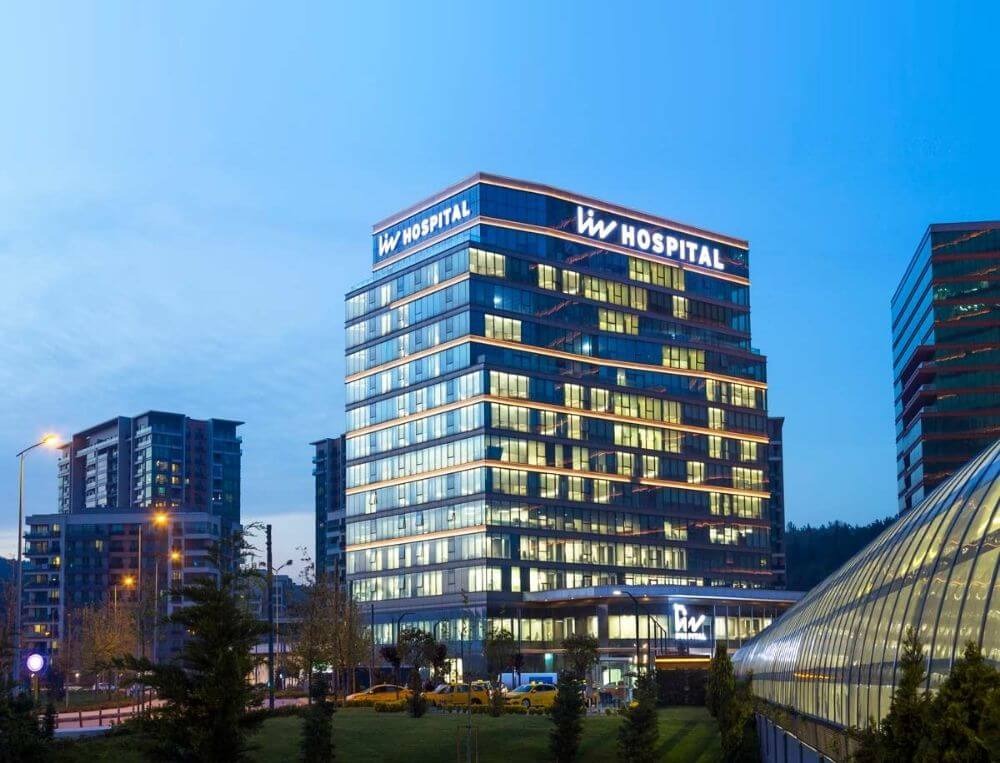
If you're looking for autism treatment with stem cell therapy in Turkey, we highly recommend Liv Hospital. The clinic has a team of experienced doctors and medical professionals who specialize in stem cell therapies. Over the years, Liv Hospital has demonstrated remarkable success in effectively utilizing stem cell therapy for the treatment of autism.
Liv Hospital has implemented a well-established protocol for conducting stem cell treatments, which has received official approval from the esteemed Turkish Ministry of Health.
Vitalia 24
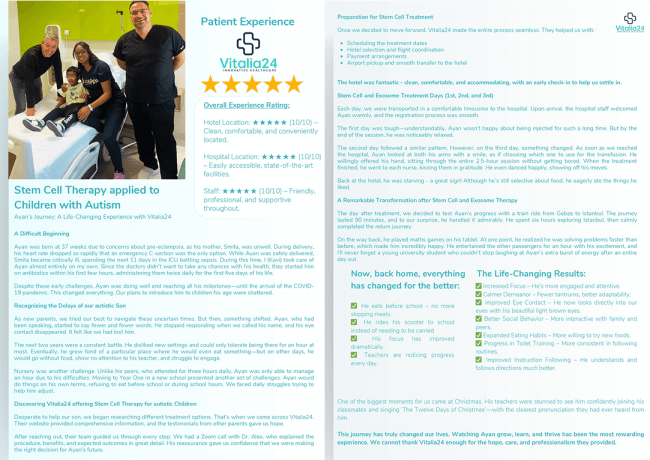
Vitalia 24 provides cutting-edge stem cell therapies utilizing MSCs and exosomes. Their comprehensive treatment approach may include intranasal exosome delivery, intraarticular or intrathecal MSC applications, and Hyperbaric Oxygen Therapy (HBOT) to optimize the effectiveness of stem cell treatments. This integrative method targets multiple aspects of autism, aiming to enhance cognitive function, communication skills, and behavioral development. By combining stem cell therapy with complementary treatments, Vitalia 24 stands out as a valuable option for families seeking holistic and innovative care.
Memorial Clinic

Turkey's Memorial Clinic effectively uses stem cells to treat autism. Their experienced team achieves significant success, addressing 60-70% of autism symptoms in children through stem cell therapy.
How A-Medical Can Help?
A-Medical supports families seeking stem cell therapy for autism in Turkey by managing the entire treatment journey from start to finish. Our team helps identify appropriate clinics, coordinates medical evaluations, and organizes appointments according to the child’s needs. We also assist with travel planning, accommodation, and communication with healthcare providers to reduce stress for families. Throughout the process, A-Medical remains a single point of contact to ensure continuity, clarity, and reliable follow-up care.