Contents
A worn knee joint steals the simple things first, the walk to the shop, a flight of stairs, a full night of sleep without aching. Total Knee Replacement in Spain starts from EUR 7,000 when you book through A-Medical, a figure that sits far below the GBP 10,000 to 17,000 most private UK hospitals charge and the USD 25,000 to 70,000 common across the United States. British patients also face an average National Health Service wait of around 28 weeks, while a Spanish clinic can schedule your surgery within two to four weeks. This guide breaks down real 2026 prices, the leading orthopaedic hospitals, and the exact steps A-Medical handles for you from the first scan to the final follow-up call.
What Is Total Knee Replacement?
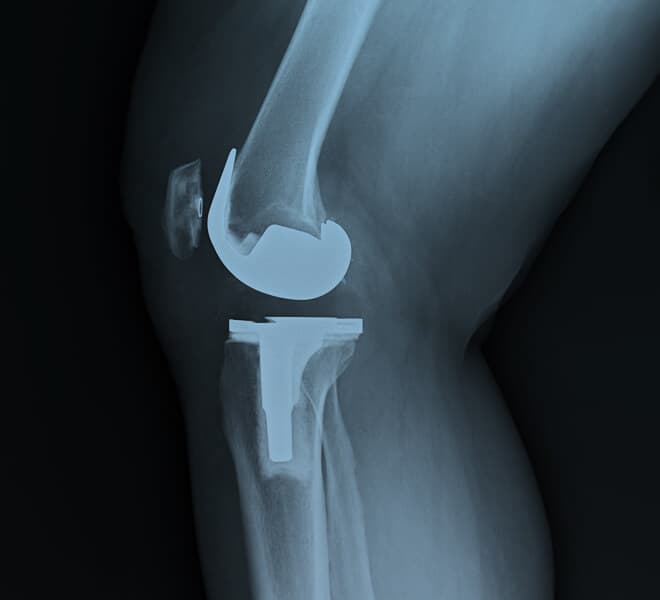
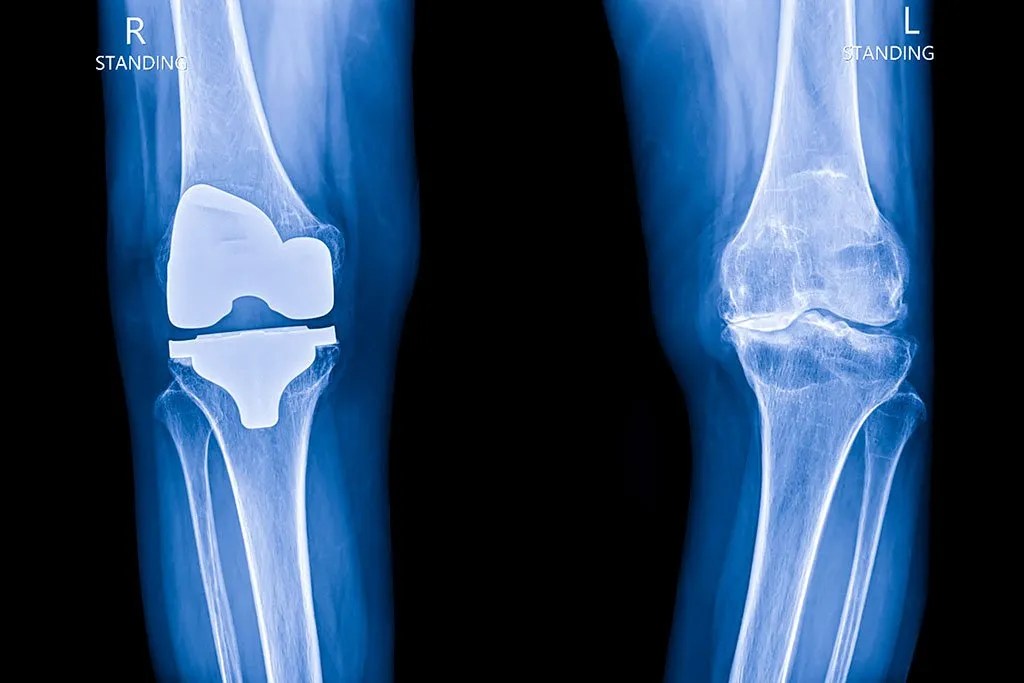
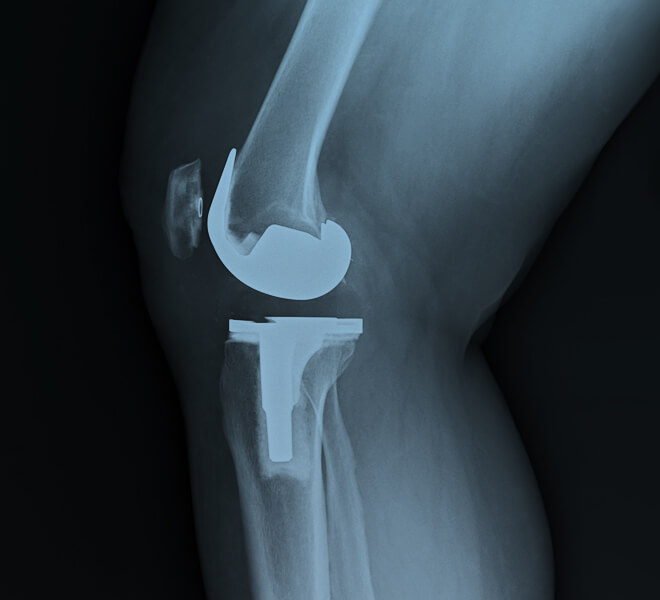
Total knee replacement, known medically as total knee arthroplasty, removes the damaged cartilage and bone from a worn knee and fits a metal and medical-grade plastic implant in its place. Surgeons cap the end of the thigh bone (femur) and the top of the shin bone (tibia), then add a smooth plastic spacer so the new joint glides without bone grinding on bone. Most patients reach for this surgery after knee osteoarthritis, rheumatoid arthritis, or an old injury wears the joint past the point where painkillers, physiotherapy, or injections still help.
The knee prosthesis itself uses cobalt-chromium, titanium, and high-density polyethylene, the same materials German and American surgeons rely on. A modern implant lasts 15 to 20 years or more for most people, and roughly 9 in 10 patients report strong pain relief afterward. Surgeons in Spain perform both standard and robotic-assisted knee replacement, which uses a navigation system to position the implant with sub-millimetre accuracy.
How Much Does Total Knee Replacement Cost in 2026?
Price drives most cross-border decisions, so here are clear numbers rather than vague ranges. The total knee replacement cost in Spain starts from EUR 7,000 for bookings made through A-Medical, and that figure covers the surgeon, anaesthetist, implant, and inpatient hospital stay. This price applies only to bookings arranged through A-Medical, because the rate comes from negotiated partner agreements with the hospitals rather than walk-in list prices.
|
Country / Pathway |
Typical Price (2026) |
Wait Before Surgery |
|
Spain (booked through A-Medical) |
From EUR 7,000 |
2 to 4 weeks |
|
United Kingdom (private) |
GBP 10,000 to 17,000 |
2 to 4 weeks |
|
United Kingdom (NHS) |
Free at point of use |
Around 28 weeks |
|
United States |
USD 25,000 to 70,000 |
1 to 6 weeks |
|
Germany (private) |
EUR 18,000 to 25,000 |
2 to 5 weeks |
Prices vary by clinic, surgeon experience, implant brand, and your own clinical condition, so treat the table as a planning guide rather than a fixed quote.
Spain reaches these prices without cutting clinical standards. Private hospitals run on lower operating and staffing costs than UK and US facilities, the country trains a large pool of orthopaedic surgeons, and a busy private sector keeps the prices competitive. You still operate inside an European Union regulated health system, with the same implant manufacturers and infection-control rules you would expect at home.
Want an exact figure for your case? Send your recent knee scan to A-Medical and receive a fixed all-in quote from a matched Spanish orthopaedic surgeon within 48 hours, with no obligation.
Why Spain Has Become a Leading Choice for Knee Replacement Surgery
Cost opens the door, but practical details keep patients coming back. Spanish private hospitals schedule knee replacement surgery within two to four weeks, against the months-long queues common in public systems across Northern Europe. Most surgeons in Madrid and Barcelona speak fluent English, and many completed fellowships in the United States or the United Kingdom, so consultations feel familiar rather than foreign.
Flight times help too. Madrid and Barcelona sit roughly two to three hours from London, Paris, and most Western European cities, and direct routes connect them to the Gulf and beyond. Spain also carries the accreditations that matter for a Your Money or Your Life decision like surgery, with Joint Commission International (JCI), ISO, and EFQM certified hospitals across both cities. Add mild weather for the recovery weeks and the choice starts to make sense beyond the price tag.
Signs You May Need a Total Knee Replacement
Knee pain alone does not send anyone to surgery. Surgeons look for a pattern that no longer responds to conservative care. Watch for these signs:
- Constant knee pain that lingers at rest or wakes you at night
- Stiffness that locks the joint after sitting or first thing in the morning
- Visible swelling that keeps returning despite medication
- A knee that bows inward or outward as the cartilage wears unevenly
- Trouble walking, climbing stairs, or rising from a chair without support
- Little or no relief from painkillers, physiotherapy, or cortisone injections
Who Is a Good Candidate for Knee Replacement?
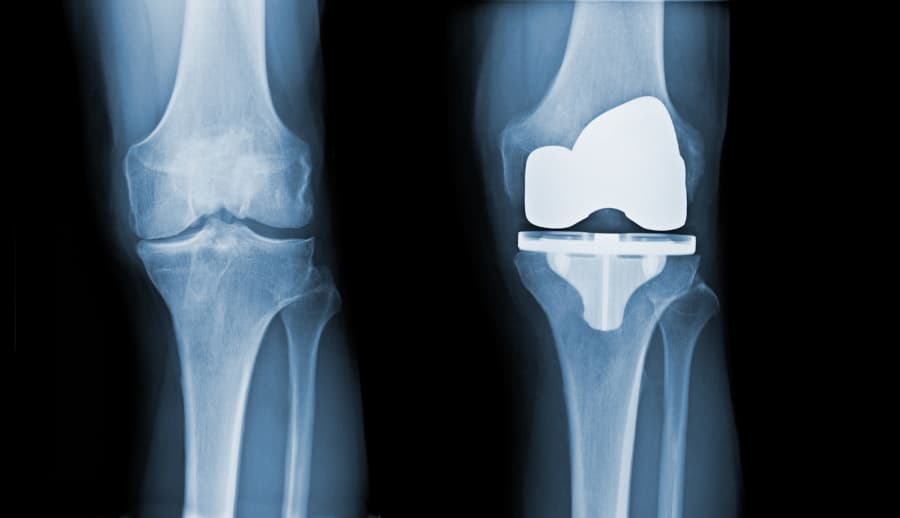
A surgeon confirms candidacy after an X-ray, an examination, and a review of your history. In general, the strongest candidates share these traits:
- Advanced knee osteoarthritis or rheumatoid arthritis confirmed on imaging
- Daily pain that limits work, sleep, and basic movement
- Conservative treatments that have already failed over several months
- A stable general health profile fit for anaesthesia and recovery
- A realistic understanding that recovery takes weeks of guided physiotherapy
Patients with active infection, severe uncontrolled diabetes, or very weak bone may need treatment for those issues first. A-Medical arranges a free online consultation so a surgeon can tell you clearly whether the procedure fits your situation before you book a single flight.
Types of Knee Replacement Surgery
Not every worn knee needs the same operation. Spanish orthopaedic teams offer the full set of options:
- Total knee arthroplasty: surgeons resurface the entire joint, the most common choice for widespread arthritis
- Partial (unicompartmental) knee replacement: surgeons replace only the damaged side of the knee, which suits early single-compartment wear and speeds recovery
- Robotic-assisted knee replacement: a navigation arm guides implant placement with high precision, which can improve alignment and fit
- Revision knee replacement: surgeons replace a worn or loosened previous implant, a more complex operation that demands an experienced team
Benefits of Total Knee Replacement
A successful procedure changes daily life within months. Patients typically gain:
- Strong, lasting relief from chronic knee pain
- Easier walking, stair climbing, and standing without aids
- Better sleep once night-time aching settles
- A return to gentle activity such as swimming, cycling, and golf
- An implant that lasts 15 to 20 years or more for most people
Risks and Possible Complications
Knee replacement carries a high success rate, yet no surgery is free of risk. An honest surgeon will explain the small chance of:
- Infection at the surgical site, which careful protocols keep rare
- Blood clots in the leg, which medication and early movement help prevent
- Stiffness or limited bending if you skip physiotherapy
- Implant loosening or wear over many years, which may need a revision
- Ongoing discomfort in a small share of patients
Choosing a high-volume surgeon at an accredited hospital pushes these risks to their lowest level, which is exactly why clinic selection matters so much.
Best Clinics for Total Knee Replacement in Spain
A-Medical matches each patient to a hospital that fits the case, the budget, and the preferred city. The following clinics rank among the strongest orthopaedic centres in Spain for knee replacement surgery.
Centro Medico Teknon (Barcelona)

Teknon counts as one of the most respected private hospitals in Spain for joint surgery. The Joint Commission International has renewed its accreditation seven times, and the EFQM excellence mark backs that record. Surgeons here treat international athletes and have built deep experience in hip and knee arthroplasty, ligament reconstruction, and regenerative techniques such as stem cell and platelet-rich plasma therapy.
For a total knee replacement, the orthopaedic team offers both standard and robotic-assisted approaches, and several of its surgeons trained at leading centres in the United States and the United Kingdom. International patients get a 24/7 contact centre, interpreter support, and private rooms with companion beds, so a partner can stay close during the inpatient days.
Barcelona itself sits about two hours from most Western European cities, which makes Teknon a practical pick for patients who want top-tier orthopaedic care with short travel times.
Quironsalud Madrid University Hospital

Quironsalud runs the largest private hospital group in Spain, and its Madrid university hospital handles a heavy volume of complex orthopaedic procedures. JCI accreditation, advanced navigation systems for precise implant placement, and surgeons with three decades of experience in knee and hip replacement put it among the safest choices in the capital.
The hospital performs both open and arthroscopic procedures and selects the approach that suits each patient rather than applying one routine to everyone. Its scale also means strong intensive-care backup and rehabilitation support on site, which matters for older patients or those with extra health considerations.
Patients who fly into Madrid reach the hospital quickly, and the group coordinates follow-up care either in person or by video once you return home.
Hospital Ruber Internacional (Madrid)

Ruber Internacional carries JCI and ISO certifications and earned the International Medical Travel Journal award for the best hospital for international patients in Spain. With more than 25,000 surgeries managed and around 400,000 patients treated each year, it has the surgical volume that drives strong knee replacement outcomes.
Its orthopaedic department covers hip and knee replacements, arthroscopy, and sports injuries, supported by modern imaging and surgical technology. The hospital pairs that clinical strength with structured support for overseas patients, including interpreters and coordinated logistics, which removes much of the friction of treatment abroad.
Clinica Universidad de Navarra (Madrid and Pamplona)

This academic hospital holds JCI accreditation and has treated more than 700,000 patients from 70 countries. Its orthopaedic surgeons focus on limb preservation and advanced reconstruction, and the centre runs the kind of research-driven practice you expect from a teaching hospital.
For knee replacement in Spain, the clinic offers precise pre-surgical planning and modern implant systems, with a team that handles both routine and difficult cases. Patients who want a university hospital setting with strong academic credentials often choose this option.
Hospital Universitari Dexeus (Barcelona)

Dexeus houses a well-known orthopaedic and traumatology institute in Barcelona, recognised across Europe for knee and sports surgery. Its surgeons have published widely on cartilage repair, meniscus treatment, and joint reconstruction, and the centre pioneered advanced cartilage and meniscal transplant techniques in Spain.
The hospital suits patients who want a surgeon with a heavy research and clinical focus on the knee specifically, rather than a general orthopaedic profile. International coordination, interpreter services, and telemedicine follow-up round out the offer for overseas patients.
Hospital HM Nou Delfos (Barcelona)

HM Nou Delfos combines a strong orthopaedic department with precise diagnostic tools such as EOS imaging, which captures full-body, weight-bearing images at low radiation. That level of imaging helps surgeons plan total knee arthroplasty with careful attention to leg alignment.
The hospital forms part of the HM group, which gives it solid surgical infrastructure and rehabilitation support. It works well for patients who want detailed pre-surgical assessment and a calmer, less crowded hospital setting in Barcelona.
The Step-by-Step Process With A-Medical
Treatment abroad feels daunting until you see the steps laid out. A-Medical handles the moving parts so you focus on recovery. Here is how the process runs:
- Send your knee X-ray or MRI and a short medical history through a free online consultation.
- Receive a clinic and surgeon match plus a fixed all-in quote, usually within 48 hours.
- Confirm dates, then let the team book your hospital slot, hotel, and airport transfers.
- Arrive in Spain, meet your surgeon for a final check, and complete pre-operative tests.
- Undergo the total knee replacement, then begin guided physiotherapy in the hospital.
- Return home with a written rehabilitation plan and remote follow-up support.
If you are still comparing destinations rather than committing to Spain, our guide to the best countries for knee replacement surgery abroad lays out how the main options stack up on price, quality, and waiting times.
Recovery and How Long to Stay in Spain
Recovery starts the same day as surgery, when physiotherapists help you stand and take a few steps. Most knee replacement patients stay in hospital for three to five nights, then move to a hotel for further monitoring. Plan to spend around 10 to 14 days in Spain in total, long enough for the first wound check, suture review, and an early physiotherapy block before you fly home.
The wider knee replacement recovery follows a clear arc:
- Week 1: walking with a frame or crutches, swelling control, and gentle bending exercises
- Weeks 2 to 6: steady physiotherapy, growing range of motion, and less reliance on aids
- Weeks 6 to 12: walking unaided, returning to light activity and most daily tasks
- Months 3 to 12: continued strength gains and a return to gentle sport
Confirm with your surgeon when you may fly, since long flights too soon raise the clot risk. A-Medical schedules your return date around that medical advice rather than a fixed package length.
Expert Insight: What Really Matters When Choosing a Clinic
Orthopaedic specialists agree that surgical volume predicts outcome more reliably than marketing claims. A surgeon who performs several hundred knee replacements a year tends to deliver better implant alignment and fewer complications than an occasional operator. So the first question to ask is not where the hospital sits, but how many of these procedures your specific surgeon completes each year.
Two other points carry weight. Ask whether the clinic offers robotic-assisted placement, since accurate alignment supports a longer implant life. And confirm that the quote includes physiotherapy, because rehabilitation, not the operation alone, decides how well the new knee performs a year later. A-Medical screens for exactly these factors when it matches you to a surgeon, rather than simply pointing you to the cheapest theatre slot.
Patients weighing a different joint can read our companion guide on hip replacement surgery abroad, which follows the same honest, price-first approach.
Why Patients Choose A-Medical for Knee Replacement
A-Medical acts as your single point of contact across the whole process, from the first scan to the last check-up. Patients who book through A-Medical gain:
- Fast scheduling with no public waiting list, often within two to four weeks
- A fixed all-in quote with transparent costs and no hidden fees
- Matching to JCI accredited hospitals and high-volume knee surgeons
- Airport VIP pickup and private transfers between hotel and hospital
- Hotel or apartment arrangements close to your clinic
- Interpreter support in English, German, Arabic, and more
- A free pre-treatment online consultation with a surgeon
- Remote follow-up and recovery checks after you return home
Ready to take the next step? Book your free online consultation with A-Medical, share your knee scan, and find out your fixed price and earliest surgery date in Spain.
If a less invasive option might suit your knee, our overview of arthroscopic knee surgery abroad explains when keyhole treatment works instead of a full replacement.
Frequently Asked Questions
How much does a total knee replacement cost in Spain?
A total knee replacement in Spain starts from EUR 7,000 when you book through A-Medical, covering the surgeon, anaesthetist, implant, and hospital stay. The final figure depends on the clinic, the implant, and your clinical condition.
How long do I need to stay in Spain after knee replacement surgery?
Plan for about 10 to 14 days in total, with three to five nights in hospital followed by hotel recovery and early physiotherapy. Your surgeon confirms a safe date to fly home before you book the return flight.
Is knee replacement in Spain safe for international patients?
Yes, leading Spanish hospitals hold JCI, ISO, and EFQM accreditations and operate inside the European Union regulatory system. They use the same implant brands and infection-control standards found in the UK, Germany, and the United States.
How long does a knee replacement implant last?
Most modern knee implants last 15 to 20 years or longer, and around 9 in 10 patients report strong pain relief. Accurate implant placement, often helped by robotic assistance, supports the longest lifespan.
Will I get an English-speaking surgeon in Spain?
Yes, most orthopaedic surgeons in Madrid and Barcelona speak fluent English, and many trained in the US or UK. A-Medical also provides interpreter support throughout your stay if you prefer another language.
How soon can A-Medical schedule my surgery?
A-Medical typically arranges knee replacement surgery within two to four weeks of confirming your case, with no public waiting list. You receive a clinic match and fixed quote within about 48 hours of sending your scan.
What is the difference between total and partial knee replacement?
Total knee arthroplasty resurfaces the whole joint and suits widespread arthritis, while a partial replacement treats only the damaged side of the knee. Partial surgery often means a faster recovery, but only a surgeon can confirm which one fits your knee.